
Vitamins and Minerals Explained
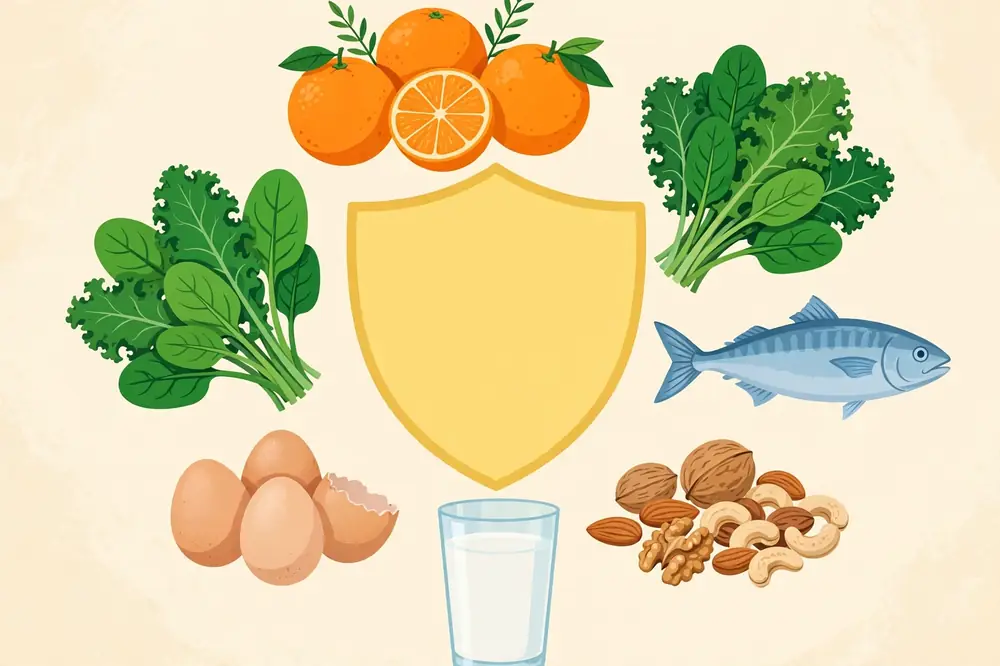
Vitamins and minerals are the small but mighty nutrients your body needs to work properly. They do not provide energy the way carbohydrates, protein and fat do, but without them, nothing else works as it should: your bones weaken, your blood cannot carry oxygen properly, your skin struggles to heal and your immune system falters. The good news is that a varied, balanced diet provides almost everything most people need. This guide explains what vitamins and minerals are, what each one does, where to find them in food, and when a supplement might actually be worth considering.
Contents
- Quick Answer
- Vitamins vs Minerals: What’s the Difference?
- Fat-Soluble Vitamins: A, D, E and K
- Water-Soluble Vitamins: B Vitamins and Vitamin C
- Vitamin D: The One Most People Should Think About
- Essential Minerals: Calcium, Iron and More
- Getting Enough From Food
- Do You Need Supplements?
- Frequently Asked Questions
⚡ Quick Answer: What Are Vitamins and Minerals?
Vitamins and minerals are essential micronutrients your body needs in small amounts to function properly. Vitamins are organic compounds found in plants and animals, while minerals are inorganic elements from soil and water. Together they support your bones, blood, skin, nerves and immune system. Most people get enough from a varied diet of vegetables, fruit, whole grains, beans, fish, eggs and dairy. The one common exception is vitamin D: the NHS recommends everyone in the UK consider a 10-microgram (400 IU) supplement during autumn and winter, because sunlight is too weak in those months for the body to make enough.
Vitamins vs Minerals: What’s the Difference?
Vitamins are organic compounds — they contain carbon and can be broken down by heat, air or acid, which is why how you store and cook food affects its nutritional value. Overcooking vegetables, for example, can destroy much of their vitamin C and B vitamins. Minerals are inorganic elements found in rocks, soil and water. Plants absorb them as they grow, and we get them through food. Unlike vitamins, minerals cannot be broken down, which makes them more stable but also means the body needs the right conditions to absorb them properly — iron from plants, for instance, is absorbed far better when eaten with vitamin C.
Both groups are classed as micronutrients, because we need them in relatively small amounts compared with carbohydrates, proteins and fats. But “small amounts” does not mean “unimportant”. Deficiencies, even mild ones, can cause fatigue, poor concentration, frequent infections, brittle bones and slow wound healing. On the other hand, more is not always better: very high doses of some vitamins and minerals can be harmful, which is why food is usually a safer source than megadose supplements. For a general reference, see the overview of vitamins and the guide to minerals on Wikipedia.
Fat-Soluble Vitamins: A, D, E and K
Fat-soluble vitamins — A, D, E and K — dissolve in fat and are stored in the liver and fatty tissues, so the body can draw on reserves. That also means they can build up if you take too much, particularly vitamin A, so high-dose supplements should be used with care.
Vitamin A (retinol) supports vision, especially night vision, the immune system and healthy skin and cell growth. It is found in liver, eggs, dairy and oily fish, while the body can also make it from beta-carotene in orange and dark green vegetables such as carrots, sweet potatoes and spinach. Vitamin D regulates calcium and phosphate, keeping bones, teeth and muscles healthy — it gets its own section below. Vitamin E is an antioxidant that protects cells from damage; it is found in nuts, seeds, vegetable oils and green leafy vegetables. Vitamin K is needed for blood clotting and for bone health, and is found in leafy greens, broccoli and vegetable oils. Because these vitamins dissolve in fat, a little healthy fat with your vegetables — a drizzle of olive oil on a salad, for instance — actually helps your body absorb them.
Water-Soluble Vitamins: B Vitamins and Vitamin C
Water-soluble vitamins — vitamin C and the B vitamins — dissolve in water and are not stored in large amounts, so they need to be topped up regularly through food. Because they dissolve in water, boiling vegetables and throwing the water away can waste them; steaming or cooking in a small amount of water is a better choice.
The B vitamins are a group of eight that work closely together, mainly in energy metabolism and nervous system function. B1 (thiamine), B2 (riboflavin) and B3 (niacin) help release energy from food and keep the nervous system healthy. B6 (pyridoxine) and B9 (folate or folic acid) help make red blood cells and support cell growth; folate is especially important before and during early pregnancy. B12 (cobalamin) is essential for nerve function and red blood cell formation, but it is found almost only in animal products — meat, fish, dairy and eggs. Vegans and strict vegetarians are at real risk of B12 deficiency and should use fortified foods or a supplement. Vitamin C supports immune function, helps form collagen (essential for skin, blood vessels and wound healing) and improves iron absorption from plant foods. Adults aged 19 to 64 in the UK need about 40 milligrams a day, easily met with a couple of portions of fruit and vegetables — citrus fruits, kiwi, strawberries, peppers and broccoli are all rich sources. The NHS Scotland guide gives a clear, plain-language summary of vitamins and minerals and their food sources.
Vitamin D: The One Most People Should Think About
Vitamin D is unusual: the main source is not food but sunlight. When UVB rays hit your skin, your body makes vitamin D itself. The catch is that in the UK, from October to early March, sunlight is not strong enough for the body to make enough vitamin D, however long you spend outdoors. Food sources — oily fish such as salmon and mackerel, egg yolks, and fortified milk and cereals — provide only small amounts.
Because of this, the NHS recommends that everyone in the UK consider taking a 10-microgram (400 IU) vitamin D supplement during autumn and winter. Some groups should consider it all year round: people who are rarely outdoors, who cover most of their skin, or who have darker skin. Vitamin D helps the body absorb calcium, so it is central to bone health, and it also supports the immune system and muscle function. Too much vitamin D from supplements can cause calcium to build up in the blood, so stick to the recommended dose and do not take high-dose supplements without medical advice. You can read the detail in the vitamin D article on Wikipedia.
Essential Minerals: Calcium, Iron and More
Minerals are necessary for three main reasons: building strong bones and teeth, controlling body fluids inside and outside cells, and turning the food you eat into energy. The most important ones to know about are calcium, iron, magnesium, potassium, zinc and iodine.
Calcium is the most abundant mineral in your body. It builds strong bones and teeth, helps muscles contract, regulates your heartbeat and ensures blood clots normally — important for healing. Adults need about 700 milligrams a day. Dairy products are the classic source, but leafy greens, fortified plant milks, tofu made with calcium sulphate and tinned fish eaten with their soft bones are good alternatives. Calcium absorption depends heavily on vitamin D, which is why the two are often taken together. Low calcium intake over many years is linked to osteoporosis, particularly in post-menopausal women. Find out more at the calcium page on Wikipedia.
Iron helps your body make red blood cells, which carry oxygen around the body. Too little iron leads to iron-deficiency anaemia — tiredness, weakness, pale skin and shortness of breath. Iron in red meat (haem iron) is absorbed easily; iron from plants (non-haem iron) in lentils, beans, spinach and fortified cereals is absorbed less well, but eating it with vitamin C — for example, lentil curry with tomatoes, or a glass of orange juice with breakfast cereal — boosts absorption. Tea and coffee with meals can reduce absorption, so it is best to drink them between meals. Magnesium helps turn food into energy and keeps the parathyroid glands, which are important for bone health, working normally. It is found in nuts, seeds, whole grains, leafy greens and dark chocolate. Potassium helps regulate fluid balance and blood pressure and is abundant in fruit, vegetables, potatoes and beans. Zinc supports immunity and wound healing; meat, shellfish, chickpeas, nuts and seeds are good sources. Iodine, needed for a healthy thyroid, comes mainly from iodised salt, dairy and seafood.
Getting Enough From Food
The best strategy for vitamins and minerals is simple: eat a varied diet. No single food covers everything, but a week that includes colourful vegetables and fruit, whole grains, beans and lentils, oily fish, eggs, dairy or fortified alternatives, and nuts and seeds will cover most people’s needs. A few practical habits help: eat a rainbow of vegetables across the week to cover different vitamins; pair plant iron with vitamin C; add a little healthy fat to salads to absorb fat-soluble vitamins; and do not over-boil vegetables.
Cooking methods matter more than most people realise. Steaming, roasting and stir-frying preserve more vitamins than long boiling. And a balanced plate makes getting your nutrients almost automatic — see the basics in our Health guides, where you will find everyday nutrition advice alongside this one.
Do You Need Supplements?
For most healthy adults eating a varied diet, supplements are not necessary. Food provides nutrients in the combinations and amounts the body handles best, and high-dose supplements can cause harm: too much vitamin A can damage the liver, too much iron can damage organs, and too much calcium can cause kidney stones. The NHS position is that most people can get all the vitamins and minerals they need from a balanced diet, with a few exceptions.
Exceptions where a supplement may be sensible include: vitamin D in autumn and winter (as above); folic acid for women trying to conceive and in the first 12 weeks of pregnancy; B12 for vegans and strict vegetarians; and iron or other supplements only where a doctor or dietitian has found a deficiency. If you are pregnant, breastfeeding, have a medical condition, take regular medication, or are considering supplements for a child, talk to your GP, pharmacist or a registered dietitian first. Supplements are not a substitute for a healthy diet — they are a targeted top-up for a specific gap. For more wellbeing reading, explore our Health category.
Frequently Asked Questions
What is the difference between a vitamin and a mineral?
Vitamins are organic compounds that can be broken down by heat, air or acid. Minerals are inorganic elements from soil and water that cannot be broken down. Both are essential micronutrients needed in small amounts.
Do I need a multivitamin every day?
Most healthy adults eating a varied diet do not need one. The exceptions are vitamin D in autumn and winter, folic acid around pregnancy, and B12 for vegans. Ask a pharmacist or GP if you are unsure.
Which vitamin is most commonly deficient?
In the UK, vitamin D is the most common gap, because sunlight is too weak from October to March for the body to make enough. That is why the NHS recommends a 10-microgram supplement in those months.
Can I get enough iron without eating meat?
Yes, from lentils, beans, tofu, spinach and fortified cereals — but plant iron is absorbed less well, so eat it with a source of vitamin C, such as citrus fruit, peppers or tomatoes, at the same meal.
Is it possible to take too many vitamins?
Yes. Fat-soluble vitamins (A, D, E and K) and minerals such as iron and calcium can build up to harmful levels in high doses. Stick to recommended amounts and get advice before taking high-dose supplements.
Note: This article is general health information, not personal medical advice. If you have symptoms of deficiency, are pregnant, or take regular medication, consult a healthcare professional before taking supplements.
Related: everyday wellness in Lifestyle