
Packing List for International Travel
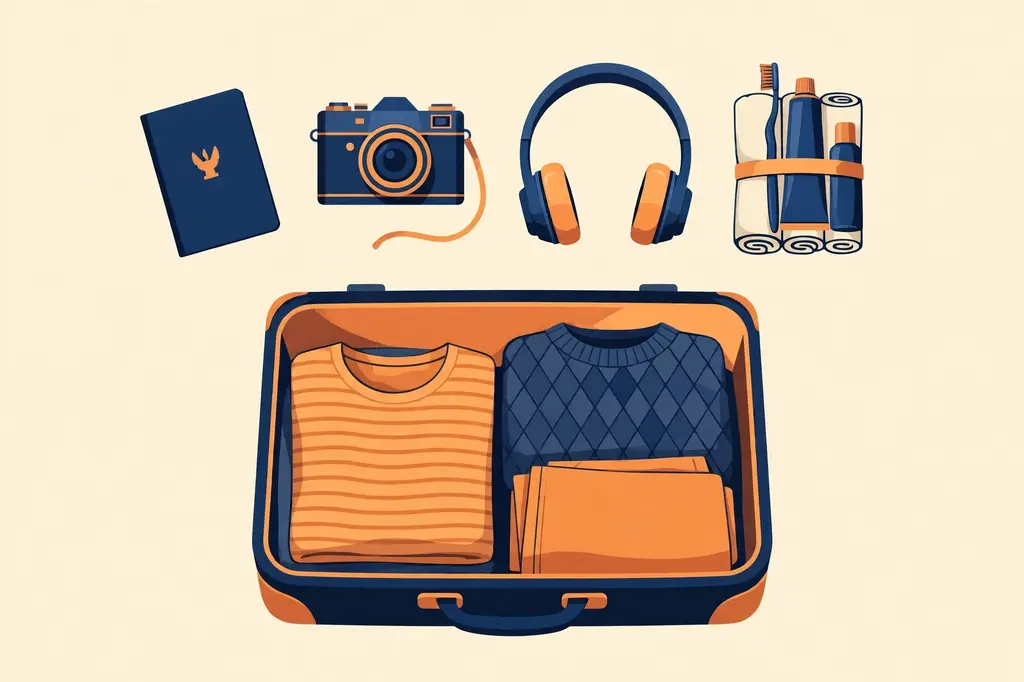
A good packing list for international travel is the difference between a smooth trip and a stressful one. International trips punish forgetfulness far more than domestic ones: forget a charger at home and you buy another one, but forget your passport, prescription medication or the right power adapter and you may not board the plane, or you may spend a day of your holiday fixing the problem. This guide gives you a complete, copy-ready list organised by category, plus the rules that keep your bag light and your trip calm.
⚡ Quick Answer: Packing List for International Travel
Pack in five groups: documents, carry-on essentials, clothing, toiletries and medication, and tech. Keep your passport, medication, phone, chargers and one change of clothes in your carry-on, never in checked luggage. Follow the 5-4-3-2-1 clothing formula for a week (5 tops, 4 bottoms, 3 shoes, 2 layers, 1 nice outfit), keep liquids under 100 ml per container in carry-on, and bring a universal adapter. Start packing three to five days before departure.
Contents
- Quick Answer: Packing List for International Travel
- Before You Pack: The Pre-Departure Checks
- Documents and Money: The Non-Negotiables
- Carry-On Essentials: What Never Goes in Checked Luggage
- Clothing: The 5-4-3-2-1 Formula
- Toiletries and Health Essentials
- Tech, Adapters and Power
- How to Pack Light and Stay Organised
- Destination Extras: Cold, Beach and Business Trips
- Frequently Asked Questions
Before You Pack: The Pre-Departure Checks
Packing starts before you open a suitcase. Check your passport first: many countries require it to be valid for at least six months beyond your return date and to have at least two blank pages. Renew early if it is close to expiry, because an expedited passport still takes time. Next, check whether your destination needs a visa or an electronic travel authorisation such as an ESTA for the United States or an ETIAS for Europe, and apply well ahead of your trip.
Check your airline’s baggage rules before choosing a bag. Budget airlines have strict size and weight limits for both cabin and checked luggage, and the fee for an overweight bag at the airport is always higher than paying in advance. Check the weather forecast for your destination and the activities you have planned, and check the local plug type and voltage so you pack the right adapter. Finally, tell your bank you are travelling and confirm your phone plan or buy an eSIM, so you land connected instead of hunting for Wi-Fi.
Documents and Money: The Non-Negotiables
Documents are the one category where forgetting something can end a trip before it starts. Pack these first, and keep them in your personal item, not in checked luggage.
- Passport — valid for six months beyond your return date. A passport is the single most important travel document you own, so keep a photocopy and a photo of it on your phone as backup.
- Visas and travel authorisations — printed copies as well as digital ones, in case a border officer asks.
- Flight tickets and hotel confirmations — saved offline on your phone and printed, with booking references and addresses.
- Travel insurance documents — policy number and emergency contact number, saved digitally and on paper.
- Driving licence and International Driving Permit — if you plan to drive, many countries require an IDP alongside your licence.
- Payment cards and cash — a primary credit card, a backup card kept separately, and some local currency for small purchases and emergencies.
- Emergency contacts — written down, not only in your phone, in case the battery dies.
Carry-On Essentials: What Never Goes in Checked Luggage
Checked bags get delayed. Plan as if yours will be. The rule is simple: if you cannot cheaply replace it at your destination, it flies in the cabin with you. Carry-on baggage rules also require lithium batteries, including power banks and laptops, to travel in the cabin, not the hold.
- Passport and all travel documents
- Wallet, cards and cash
- All medication, in original packaging, with enough for the full trip plus a few extra days
- Phone, laptop, chargers and headphones
- One full change of clothes, in case your bag is delayed 24 to 48 hours
- Toothbrush, deodorant and basic toiletries in a clear liquids bag
- Snacks, an empty water bottle to fill after security, and a warm layer for the flight
- Downloaded maps, books and shows for the flight
Liquids in carry-on must be in containers of 100 ml or less, all fitting into one clear resealable bag. This rule is near-universal internationally, so decant toiletries into travel-sized bottles before you leave.
Clothing: The 5-4-3-2-1 Formula
Overpacking clothing is the most common packing mistake, and a formula fixes it. For one week of international travel, pack five tops, four bottoms, three pairs of shoes, two layers and one nice outfit. Every top should work with every bottom, so choose one colour family and versatile pieces. The count covers two weeks with one wash, and laundry services or a hotel sink wash extend it further.
Choose fabrics that earn their space. Merino wool and quick-dry synthetics resist odour and dry overnight; heavy cotton and denim are bulky and slow to dry. Pack one pair of comfortable walking shoes above all else, because you will walk far more than you expect, plus one casual pair and one dressier or activity-specific pair. Roll clothes instead of folding them to save space and reduce wrinkles, and use packing cubes to keep categories separate and to compress soft items. For more on keeping travel costs down, including travelling with only a carry-on, read our guide on how to plan a budget trip.
What about longer trips?
For trips of three weeks or more, do not pack three times as much. Pack for one week and plan to do laundry. A capsule wardrobe of mix-and-match pieces, plus one weather layer for the destination, covers almost any trip, and buying a t-shirt or a rain jacket at your destination is part of the experience.
Toiletries and Health Essentials
Toiletries are the easiest category to cut, because nearly everything is available at your destination. Pack travel-sized shampoo, conditioner, toothpaste, deodorant, sunscreen and any skincare you cannot easily replace. Put liquids in the resealable bag and keep the rest in a small wash bag that fits in your suitcase.
Health items are the opposite: pack them fully and never rely on finding them abroad. Bring all prescription medication in original bottles, with a copy of the prescription and, if needed, a translated doctor’s note. Some countries restrict certain medicines, so check destination rules before you fly. Add a small first aid kit: plasters, antiseptic cream, pain relievers, rehydration salts, motion sickness tablets and any allergy medication. Pack insect repellent and sunscreen for tropical destinations, and bring enough contact lenses or glasses plus a spare pair.
Tech, Adapters and Power
Check your destination’s plug type before you travel. The world uses several different plug shapes, and a universal adapter with USB ports covers most of them in one device. Most modern chargers accept 100 to 240 volts, so you usually need an adapter, not a voltage converter, but check the label on older devices. Pack a high-capacity power bank between 10,000 and 20,000 mAh, remembering that most airlines cap power banks at 100 watt-hours (about 27,000 mAh) and require them in carry-on.
Bring the right cables, a spare, and a multi-port charger so you can charge a phone, a watch and headphones from one socket. Download offline maps, your tickets, hotel addresses and the local language pack before you leave home, so a dead signal at the airport never strands you. For a full rundown of what your bag should contain, luggage itself is worth a quick read: modern cases, cubes and bags are designed around exactly these trade-offs between weight, size and organisation.
How to Pack Light and Stay Organised
Packing light is a skill, not a talent. Start by writing your list, then lay everything out on the bed and remove a third of it. Experienced travellers use one rule above all: make a proper personal packing list and treat it as a contract, packing nothing that is not on it. If an item does not serve at least two purposes or is not essential, leave it behind.
Packing cubes, compression bags and rolling are the three space-savers that actually work. Cubes keep clothes organised by day or by type, so you never unpack the whole bag to find one shirt. Put heavier items near the wheels of a suitcase or the bottom of a backpack, keep the things you need on arrival at the top, and weigh your bag before you leave home with a small luggage scale. Leave a little empty space: you will buy something, and an overstuffed bag is miserable to repack.
Destination Extras: Cold, Beach and Business Trips
Adjust the base list to the trip. For cold destinations, add thermal layers, a proper waterproof coat, gloves, a hat and warm socks; layers beat one heavy coat because temperatures change indoors and out. For beach trips, add swimwear, sandals, reef-safe sunscreen, a dry bag for your phone and a light cover-up. For business trips, add one smart outfit, a wrinkle-release spray, a laptop sleeve and a portable steamer or a travel iron, and keep your work clothes in a separate cube so they stay crisp.
For adventure travel, add a daypack, a reusable water bottle with a filter, a head torch and a basic repair kit. Whatever the trip, check our Travel category for more planning guides, and pair this list with our travel insurance guide so your documents, health and cover are all sorted before you fly.
For more trip planning, explore our Travel category and our Lifestyle section.
Frequently Asked Questions
When should I start packing for an international trip?
Start three to five days before departure. That gives you time to wash clothes, buy missing items, check your documents and weigh your luggage, instead of rushing the night before and forgetting something important.
How many clothes should I pack for a week abroad?
Use the 5-4-3-2-1 formula: five tops, four bottoms, three pairs of shoes, two layers and one nice outfit. Choose pieces that all mix and match, and plan on one wash if the trip runs longer than a week.
What should I never put in checked luggage?
Never check your passport, medication, phone, laptop, chargers, power bank, valuables or a change of clothes. If your bag is delayed, everything you need for 24 to 48 hours should be in your carry-on.
What size liquids can I take in hand luggage?
Each container must be 100 ml or less, and all containers must fit in a single clear resealable bag of about one litre. This applies on almost all international flights.
Do I need a universal travel adapter?
Yes, unless you are sure your destination uses the same plug type as home. A universal adapter with USB ports covers most countries in one device, and most modern chargers accept 100 to 240 volts, so you usually do not need a separate voltage converter.