
Lowell McAdam And Tom Kennedy
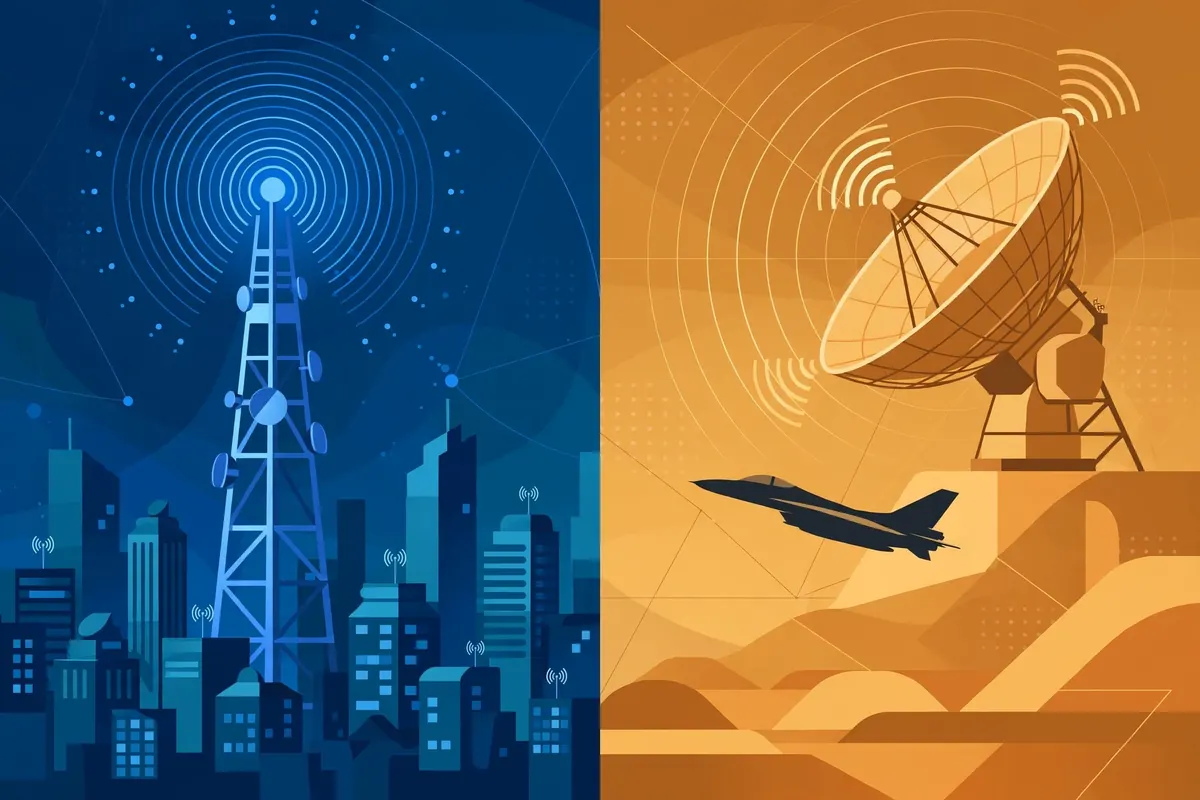
Lowell McAdam and Tom Kennedy are two American business executives whose careers show how an engineering background can lead to the top of a major corporation. McAdam led Verizon Communications, one of the largest telecommunications companies in the United States, while Kennedy led Raytheon, one of the country’s leading aerospace and defence technology companies. Their names are often searched together, which raises an obvious question: are they connected, and what do their careers have in common? This article answers that question with verified facts, compares their leadership paths side by side, and draws out the lessons their careers offer.
Table of Contents
- Quick Answer: Are Lowell McAdam and Tom Kennedy Connected?
- Lowell McAdam and Tom Kennedy at a Glance
- Who Is Lowell McAdam?
- Who Is Tom Kennedy?
- Lowell McAdam vs. Tom Kennedy: Careers Compared
- What Is the Connection Between Lowell McAdam and Tom Kennedy?
- Leadership Lessons From Lowell McAdam and Tom Kennedy
- Common Misconceptions About Lowell McAdam and Tom Kennedy
- Frequently Asked Questions About Lowell McAdam and Tom Kennedy
⚡ Quick Answer: Are Lowell McAdam and Tom Kennedy Connected?
No. There is no verified personal, family or professional relationship between Lowell McAdam and Tom Kennedy. McAdam is the former chairman and chief executive officer of Verizon Communications, a telecommunications company. Kennedy is the former chief executive officer and chairman of Raytheon, an aerospace and defence technology company. Both were engineers who served in the United States military before rising to lead large technology-driven corporations, which is why their careers are so often compared — but they worked in different industries, for different companies, and there is no public record of them working together.
Lowell McAdam and Tom Kennedy at a Glance
The table below gives the essential facts about both men in one place.
| Detail | Lowell McAdam | Tom Kennedy |
|---|---|---|
| Full name | Lowell Clayton McAdam | Thomas A. Kennedy |
| Born | 28 May 1954, Buffalo, New York | Not widely published in public sources |
| Best known for | Former CEO and chairman of Verizon | Former CEO and chairman of Raytheon |
| Primary industry | Telecommunications | Aerospace and defence |
| Major organisation | Verizon Communications | Raytheon Company |
| Became CEO | August 2011 | March 2014 |
| Education | Cornell University; MBA, University of San Diego | Rutgers University; Air Force Institute of Technology; UCLA |
| Military service | U.S. Navy Civil Engineer Corps | U.S. Air Force |
| Left top role | Verizon CEO in 2018; chairman in March 2019 | Raytheon Technologies executive chairman in 2021 |
Who Is Lowell McAdam?
Lowell Clayton McAdam was born on 28 May 1954 in Buffalo, New York. His career is a clear example of a technical specialist rising through the ranks of a large corporation to run it. He earned a bachelor’s degree in engineering from Cornell University and later completed a Master of Business Administration at the University of San Diego. That pairing of engineering and business education shaped everything that followed: he could understand the technology his companies sold, and he could also manage the finances and strategy behind it.
Early Life and Military Service
Before entering the telecommunications industry, McAdam served for six years in the U.S. Navy Civil Engineer Corps and became a licensed professional engineer. Military service gave him early experience of managing large technical projects, working within strict budgets and deadlines, and leading teams in demanding conditions. This background is one of the most striking similarities between McAdam and Tom Kennedy, who also served in the armed forces before his corporate career.
Early Career in Telecommunications
McAdam built his reputation in wireless communications over many years. He held management positions at Pacific Bell and later joined AirTouch Communications, where he worked on international wireless operations across Europe and Asia. He then became president and chief executive officer of PrimeCo Personal Communications, a wireless joint venture linked to Bell Atlantic and Vodafone AirTouch, where he helped oversee the development and introduction of digital wireless services.
These roles exposed him to the main challenges of the telecoms business: building and operating wireless networks, managing large technical teams, developing international business relationships, and adapting operations as technology changed. Each step prepared him for the much larger responsibilities that followed at Verizon.
Leadership at Verizon Communications
McAdam joined Verizon Wireless in 2000 as executive vice president and chief operating officer. He became president and chief executive officer of Verizon Wireless in 2007, running the business through a period of intense competition in mobile communications. In October 2010 he became president and chief operating officer of Verizon Communications, and he was appointed chief executive officer of the whole group with effect from 1 August 2011. He became chairman of the board in January 2012.
His years as chief executive included several major strategic decisions. The most significant was Verizon’s 2014 acquisition of Vodafone’s 45 per cent stake in Verizon Wireless, reported at about $130 billion, which gave Verizon full ownership of its wireless business and simplified its structure. During his tenure Verizon also moved into digital media, acquiring AOL and Yahoo’s core internet businesses, and invested heavily in network infrastructure as the industry prepared for 5G technology.
In 2018 McAdam stepped down as chief executive and was succeeded by Hans Vestberg, who had joined Verizon as chief technology officer the previous year. McAdam retired as a Verizon employee at the end of 2018 and stepped down as chairman in March 2019, completing a leadership transition that had been planned in advance.
Who Is Tom Kennedy?
Thomas A. Kennedy is best known for leading Raytheon, one of America’s largest aerospace and defence technology companies. Like McAdam, he came to executive leadership through engineering rather than through sales or finance, and his career spanned several decades inside a single industry. His public profile is lower than that of many chief executives, because defence companies work largely with government customers and say less about their leaders in public.
Education and Engineering Experience
Kennedy earned a bachelor’s degree in electrical engineering from Rutgers University, a master’s degree in electrical engineering from the Air Force Institute of Technology, and a doctorate in engineering from the University of California, Los Angeles. That is an unusually deep academic background for a chief executive, and it shaped his reputation as a technically grounded leader.
He also served in the U.S. Air Force, reaching the rank of captain. His military work included satellite launch vehicle avionics development and production programmes, giving him direct experience of the defence and aerospace systems that Raytheon builds. His career is therefore a straight line from military engineering to defence industry leadership.
Career Development at Raytheon
Kennedy joined Raytheon in 1983 to work on radar engineering. Over the following decades he moved through roles in engineering, programme management, business operations and organisational leadership, including senior positions in Raytheon’s Space and Airborne Systems business and its Integrated Defense Systems business. Before becoming chief executive he served as executive vice president and chief operating officer, a role that required him to coordinate major business units and improve efficiency across the company.
His earlier engineering work involved radar systems and electronic warfare technologies, and he held patents in these technical fields. This hands-on expertise gave him credibility with engineers, customers and government officials alike, and it is one of the reasons his rise is often studied as an example of technical leadership.
Becoming CEO and Chairman of Raytheon
Kennedy became chief executive officer of Raytheon Company on 31 March 2014, succeeding William H. Swanson, and became chairman of the board in October 2014. As chief executive he was responsible for business strategy, organisational performance, major technology programmes and relationships with government and international customers. His leadership required balancing technological innovation with programme delivery, financial management and regulatory obligations.
The defining event of his tenure was the 2020 merger of Raytheon Company and United Technologies Corporation, which formed Raytheon Technologies. Kennedy became executive chairman of the combined company and retired from that position with effect from 1 June 2021. The merger was one of the largest deals in the history of the aerospace and defence industry, and managing it through to completion was a fitting end to a career spent building and running complex technology organisations.
Readers who want to compare another pair of technology and defence leaders can also read our article on Jim Taiclet and Gary Heminger, and for another look at a well-known chief executive paired with a public figure, see Tom Kennedy and Anna Wintour.
Lowell McAdam vs. Tom Kennedy: Careers Compared
On the surface, McAdam and Kennedy look remarkably similar: two American engineers, both with military service, both became chief executive of a large technology company in the early 2010s, and both retired from the top job within a few years of each other. The differences matter just as much, however, because they show how the same kind of background can lead to very different careers.
| Factor | Lowell McAdam | Tom Kennedy |
|---|---|---|
| Industry | Telecommunications and wireless | Aerospace and defence |
| Customers | Consumers and businesses | Governments and military customers |
| Career movement | Several companies before Verizon | Raytheon from 1983 to retirement |
| Public visibility | High; a consumer-facing brand | Lower; a business-to-government company |
| Defining deal | Vodafone stake buyout in 2014 | Raytheon–United Technologies merger in 2020 |
| Technical field | Wireless networks and digital services | Radar, electronic warfare and aerospace systems |
| Education | Engineering degree plus MBA | Engineering degrees up to doctorate |
McAdam’s career was shaped by consumer markets. Subscriber numbers, network coverage, handset trends and advertising all affected Verizon’s results, and his big decisions — from the Vodafone buyout to the AOL and Yahoo acquisitions — were debated in public. Kennedy’s career was shaped by government programmes that can run for decades, where success depends on winning long contracts, delivering complex systems on time, and maintaining the trust of military customers.
That difference also explains their public profiles. Verizon is a household name, so its chief executive is a public figure. Raytheon works largely out of the public eye, so Kennedy could lead a company of similar scale with far less media attention. Neither path is better; they simply reward different kinds of leadership.
What Is the Connection Between Lowell McAdam and Tom Kennedy?
The honest answer is that there is no documented connection. There is no public record of a business partnership, a shared employer, a family relationship or a joint project between them. Their names appear together mainly because search engines pair well-known leaders in comparison content, and because their careers share an obvious pattern: engineering education, military service, decades of technical work, then the chief executive’s office.
There is one indirect link worth noting. McAdam’s successor at Verizon was Hans Vestberg, and the two men’s careers are often discussed together as a story of succession planning in telecommunications. Beyond that, the connection between McAdam and Kennedy is thematic rather than personal. They illustrate the same model of leadership — the engineer-executive — applied in two different industries.
That model is worth understanding. Both men spent years learning their industry’s technology before they were asked to run a company, and both had military experience that taught them how to manage large, disciplined organisations. Their careers suggest that deep technical knowledge, combined with operational experience, is a strong foundation for senior leadership in technology-driven businesses.
Leadership Lessons From Lowell McAdam and Tom Kennedy
Five lessons stand out from their combined careers.
1. Build expertise before seeking senior responsibility. Neither man was rushed to the top. McAdam spent years in wireless operations before running Verizon Wireless, and Kennedy spent more than thirty years at Raytheon before becoming chief executive. Their authority came from knowledge, not just from a title.
2. Develop management skills alongside technical skills. McAdam paired engineering with an MBA. Kennedy moved from radar engineering into programme management and then into running whole business units. In both cases, technical depth alone was not enough; they also had to learn how to lead large teams and manage budgets.
3. Understand the needs of your industry. McAdam focused on consumers, networks and digital services. Kennedy focused on government customers, long programmes and system reliability. Each led according to what his customers actually needed, rather than copying a leadership style from another industry.
4. Prepare for organisational change. McAdam managed Verizon through the shift to 4G and the early work on 5G, plus two major acquisitions. Kennedy managed Raytheon through a merger that created one of the world’s largest aerospace and defence companies. Both treated large changes as opportunities to be planned for, not as surprises to survive.
5. Recognise that leadership is a team effort. Both men handed over to successors — McAdam to Vestberg in 2018, Kennedy to his successor at Raytheon Technologies in 2021 — and both companies continued to operate and grow after they left. A chief executive’s real test is whether the organisation thrives after the departure, and in both cases it did.
Common Misconceptions About Lowell McAdam and Tom Kennedy
Mistake 1: Assuming they worked for the same company. They did not. McAdam’s career was in telecommunications at Verizon; Kennedy’s was in aerospace and defence at Raytheon.
Mistake 2: Assuming they had a confirmed personal relationship. No public record supports this. They should not be described as business partners, relatives or close associates without additional evidence.
Mistake 3: Treating telecommunications and defence technology as identical industries. Both are technology-driven, but their customers, regulation, sales cycles and risks are very different.
Mistake 4: Describing either executive as the current chief executive of his former company. McAdam left the Verizon chief executive role in 2018 and the chairmanship in 2019. Kennedy retired as executive chairman of Raytheon Technologies in 2021.
Mistake 5: Giving one executive credit for an entire company’s results. Verizon and Raytheon each employed tens of thousands of people. Their results reflected the work of whole organisations, not one person.
Frequently Asked Questions About Lowell McAdam and Tom Kennedy
Who are Lowell McAdam and Tom Kennedy?
Lowell McAdam is the former chairman and chief executive officer of Verizon Communications, a major American telecommunications company. Tom Kennedy, formally Thomas A. Kennedy, is the former chief executive officer and chairman of Raytheon, a major American aerospace and defence technology company.
Are Lowell McAdam and Tom Kennedy related?
There is no known family relationship between them, and no public evidence of any personal relationship.
Did Lowell McAdam and Tom Kennedy work together?
No. There is no public record of them working together, sharing an employer, or collaborating on a project.
What company did Lowell McAdam lead?
McAdam led Verizon Communications as chief executive officer from August 2011 to 2018, and served as chairman from January 2012 to March 2019. Before that he ran Verizon Wireless, becoming its president and chief executive officer in 2007.
What is Tom Kennedy best known for?
Kennedy is best known for leading Raytheon as chief executive officer from March 2014, and for guiding the company through its 2020 merger with United Technologies Corporation to form Raytheon Technologies. He retired as executive chairman in June 2021.
What educational backgrounds do Lowell McAdam and Tom Kennedy have?
McAdam studied engineering at Cornell University and earned an MBA at the University of San Diego. Kennedy earned a bachelor’s degree in electrical engineering from Rutgers University, a master’s degree from the Air Force Institute of Technology, and a doctorate in engineering from UCLA.
What leadership qualities do Lowell McAdam and Tom Kennedy share?
Both combined deep technical knowledge with military service and decades of operational experience before becoming chief executives. Both were known for disciplined, long-term management rather than short-term showmanship.
What can business professionals learn from their careers?
The clearest lesson is that technical expertise, patient career building and careful succession planning matter more than rapid promotion. Both men spent years learning their industries before leading them, and both left their companies in the hands of prepared successors.
If you found this comparison useful, you can also explore more executive comparisons in our discussion of Lowell McAdam and Tom Kennedy on Reddit and browse our other leadership comparisons.
In conclusion, Lowell McAdam and Tom Kennedy show that the engineer-executive model works in very different industries. McAdam modernised a consumer telecoms giant and secured full ownership of its wireless business. Kennedy led a defence technology leader through a historic merger. They were never partners or colleagues, but their parallel careers offer a useful guide to how technical leaders reach the top — and how they should hand over when they leave.
Related: Tom Rutledge and Simon Cowell
