
How to Become a Plumber: Training, Licensing and How Long It Takes
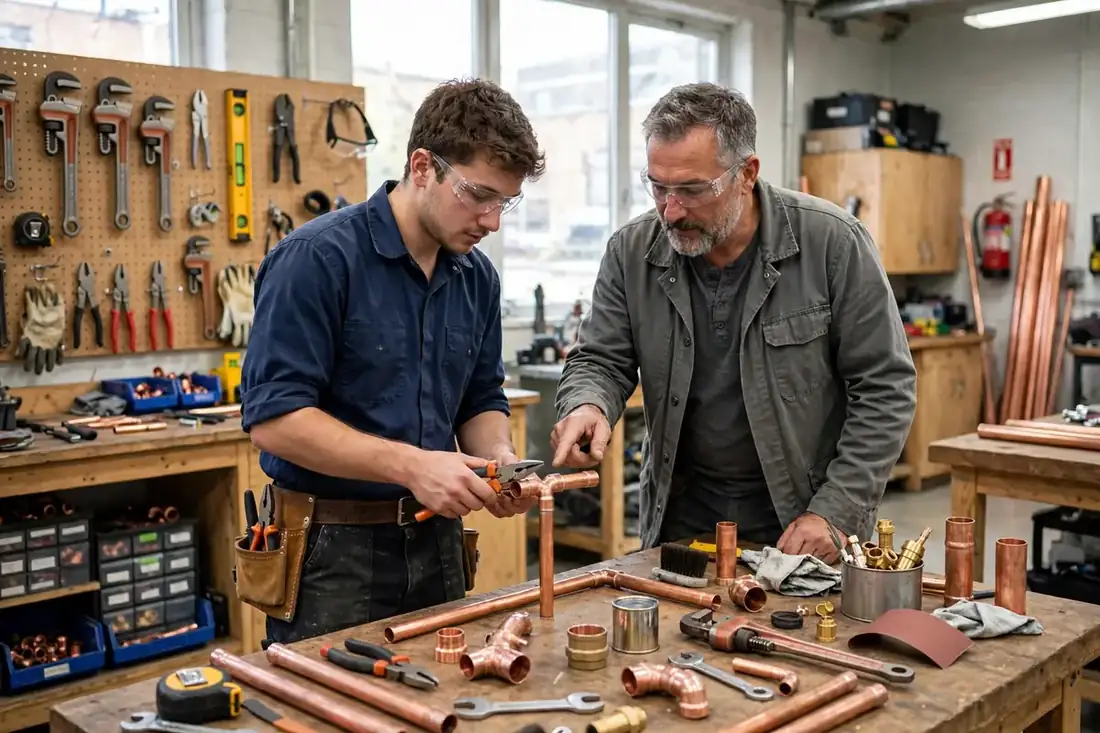
Plumbing is one of the few skilled trades where you can earn a real wage while you train, carry no student loan for a four-year degree, and still finish with a licence that lets you work anywhere in the country. Every building needs water in and waste out, and that work cannot be outsourced or automated away, which is why plumbers stay in demand through recessions and housing slowdowns alike.
The path into the trade is structured and well marked: finish high school, join a paid apprenticeship, learn on the job for four or five years, then pass a licensing exam to work as a journeyman. This guide walks through every step, how long each route takes, what it costs, what skills you will need, and what the job outlook actually looks like — so you can decide whether plumbing is the right career for you. For more practical household guidance, visit our Home Improvement guides.
⚡ Quick Answer: How to Become a Plumber
To become a plumber, finish high school or a GED, then join a paid apprenticeship that lasts four to five years. During the apprenticeship you work roughly 2,000 paid hours a year under licensed plumbers and take classroom instruction in safety, local plumbing codes and blueprint reading. After the apprenticeship, you sit your state or local journeyman licensing exam; passing it lets you work independently. From zero experience to journeyman takes four to five years, and reaching master plumber status takes another two to five years of journeyman experience plus a second exam.
Contents
- Quick Answer: How to Become a Plumber
- What Plumbers Actually Do
- How Long Does It Take to Become a Plumber?
- How to Become a Plumber: Step by Step
- Trade School vs Apprenticeship: Which Route Is Better?
- Licensing: Journeyman, Then Master Plumber
- How Much Does It Cost to Become a Plumber?
- Skills You Need to Succeed as a Plumber
- Pay and Job Outlook for Plumbers
- Mistakes to Avoid When Starting Out
- Frequently Asked Questions
What Plumbers Actually Do
Most people picture a plumber fixing a leaking tap, and that is part of the job — but it is a small part. A plumber installs, repairs and maintains the pipes, fittings and fixtures that carry water, gas and waste through homes, offices, factories and hospitals. On a new build you might rough in the pipework before the walls go up; on a service call you might trace a hidden leak, clear a blocked drain, replace a water heater or fit a new bathroom suite. A plumber works with a wide range of systems, from simple household fixtures to the complex piping in commercial buildings.
The trade is physical and varied. One day can mean soldering copper joints in a cold loft, the next diagnosing why a boiler has lost pressure or reading a blueprint to plan a drainage layout. Plumbers work indoors and outdoors, in cramped crawl spaces and on construction sites, and they deal directly with customers — so the job suits people who like solving practical problems with their hands and do not want to sit at a desk all day. According to the U.S. Bureau of Labor Statistics, plumbers also work evenings and weekends more often than most trades, because emergencies such as burst pipes do not wait for office hours.
How Long Does It Take to Become a Plumber?
The short answer is four to five years from starting your apprenticeship to becoming a licensed journeyman plumber. That is the timeline the U.S. Bureau of Labor Statistics gives in its Occupational Outlook Handbook: most plumbers learn the trade through a four- or five-year apprenticeship, receiving about 2,000 hours of paid on-the-job training each year plus technical classroom instruction. The U.S. Department of Labor’s model standard is a five-year programme with roughly 8,500 to 10,000 on-the-job hours, and many union apprenticeships run the full five years, while some non-union programmes run four.
If you go to trade school first, add six months to two years before the apprenticeship begins. A vocational programme teaches the basics — safety, tools, pipe materials, code and blueprint reading — and can make your apprenticeship application stronger, but it does not replace the apprenticeship itself: you still need the supervised hours and the licence exam. So a realistic timeline looks like this: starting from scratch with no training, expect four to five years to journeman status if you go straight into an apprenticeship, or five to seven years if you add trade school first.
Master plumber status takes longer. Most states require two to five additional years of experience as a licensed journeyman before you can sit the master plumber exam, so the full journey from beginner to master plumber usually runs six to ten years. That sounds long, but remember that you are earning a wage for nearly all of it — unlike a university degree, where you pay tuition for four years before earning anything.
How to Become a Plumber: Step by Step
Step 1: Finish High School or Get a GED
The Bureau of Labor Statistics lists a high school diploma or equivalent as the typical entry-level education for plumbers, and no prior work experience is required. The subjects that matter most are mathematics — you will calculate pipe lengths, angles, water pressure and flow rates — plus basic science, which helps with understanding water pressure, heat and materials. If you are still at school, a shop or technical class is useful, but not essential. You also need to be at least 18 years old to start most apprenticeship programmes, and you will need a driving licence, because plumbers travel to jobs.
Step 2: Apply for a Plumbing Apprenticeship
The apprenticeship is the heart of becoming a plumber. Programmes are sponsored by unions, trade associations and individual businesses — there is no single national programme, so the application process varies by area. The two main routes are union apprenticeships, run through local chapters of the United Association, which typically last five years, and non-union or merit-shop apprenticeships run by contractor associations such as PHCC or Associated Builders and Contractors, which typically run four years.
Applications usually involve a basic maths and reading test, an interview, and sometimes a waiting list, because good programmes are competitive. Having a trade school certificate, a clean driving record and a record of reliable work — even in an unrelated job — strengthens your application. Once accepted, you are a paid employee from day one: apprentices earn less than fully trained plumbers, and their pay rises as they take on more responsibility, but you are earning a wage rather than paying tuition.
Step 3: Complete the Apprenticeship
During the apprenticeship you work full time under licensed plumbers and attend classes, usually in the evenings. According to the Bureau of Labor Statistics, apprentices receive about 2,000 hours of paid on-the-job training each year, with classroom instruction covering safety, local plumbing codes and regulations, and blueprint reading. Apprentices also study mathematics, applied physics and chemistry as part of that classroom component.
Over four to five years you will progress from carrying tools and digging trenches to cutting and fitting pipe, installing fixtures, reading plans and eventually running small jobs under supervision. Your pay typically rises each year of the programme. Keep a careful record of your hours, because your state licensing board will ask for documented proof of supervised work experience before you can sit the exam.
Step 4: Pass the Journeyman Licensing Exam
Once you have completed your apprenticeship hours, you can sit the journeyman licensing exam. According to the Bureau of Labor Statistics, most states and some localities require plumbers to be licensed, and they typically require two to five years of experience plus a passing score on an exam that tests knowledge of the trade before a plumber may work independently. The exam covers plumbing codes, trade mathematics, blueprint reading and practical knowledge of materials and systems.
Licensing rules vary widely by state and even by city, so check your own state licensing board early — ideally before you start your apprenticeship — so your training hours count toward the local requirement. Some states recognise a national exam; others run their own. After passing, you are a journeyman plumber and can work independently, pull permits and supervise apprentices.
Trade School vs Apprenticeship: Which Route Is Better?
Both routes lead to the same licence, but they suit different people. Going straight into an apprenticeship is the cheapest and fastest option: you earn while you learn, you owe no tuition, and you start building the supervised hours you need from day one. The downside is that apprenticeships can be hard to get into, with waiting lists and entrance tests.
Trade school first makes sense if you want to learn the theory in a classroom before starting work, or if you want a stronger application for a competitive apprenticeship. A vocational programme usually takes six months to two years and teaches the fundamentals — tool use, pipe materials, code, blueprint reading and safety. The cost varies, but it is usually far lower than a four-year university degree. The trade-off is that you pay tuition while earning nothing, and you will still need to complete the full apprenticeship afterwards, so the total time to licence can stretch to six or seven years. An apprenticeship remains the standard route into the trade, and the Bureau of Labor Statistics describes it as how most plumbers learn the trade — trade school is a head start, not a substitute.
Licensing: Journeyman, Then Master Plumber
Licensing is what separates a plumber from a handyman. A journeyman licence lets you work without supervision, take on your own jobs and pull permits in many areas. A master plumber licence is the next step: after two to five years as a journeyman, you can sit the master exam, and passing it allows you to run a plumbing business, supervise other plumbers, sign off on permits and take on larger commercial work.
Because the requirements differ from state to state, look up your state licensing board before you commit to a training route. Some states want a set number of documented hours — for example, Texas requires about 8,000 hours plus an approved training course, while Michigan requires about 6,000 hours over at least three years. Others want a set number of years in a registered apprenticeship. In a few states, licensing is handled at the city or county level instead. Whatever the local rules, the pattern is the same everywhere: documented experience, then an exam, then a licence you must renew and keep current with continuing education.
How Much Does It Cost to Become a Plumber?
One of the trade’s biggest advantages is that it costs very little to enter. A union apprenticeship is typically free apart from books and tools, and you earn a wage throughout, so many apprentices finish with no debt at all. A non-union apprenticeship is similar. Your costs are practical ones: basic hand tools, work boots and safety gear, exam and licence fees, and transport to jobs.
If you choose trade school first, you add tuition to that bill. Costs vary widely by school, but a certificate programme commonly runs from a few hundred to a few thousand dollars, and an associate degree can cost more. Compare that with a four-year university degree, which can leave graduates tens of thousands of dollars in debt before they earn a wage. The Bureau of Labor Statistics lists no prior work experience and only a high school diploma as the entry requirement, which is part of why plumbing remains one of the most accessible routes into a well-paid skilled career.
Skills You Need to Succeed as a Plumber
Plumbing rewards a mix of practical ability and people skills. The most important are manual dexterity and physical stamina — you will work in tight spaces, lift heavy fixtures and spend long periods on your feet. Good maths matters more than most people expect: measuring, cutting and fitting pipe is all angles and calculations, and mismeasuring wastes expensive material. Problem-solving is the daily work: a leak you cannot see, a drain that keeps blocking, a boiler that fails intermittently — you have to work out what is wrong before you can fix it.
Customer service matters too, especially if you eventually run your own business. You are working in people’s homes, often at stressful moments like a flooded kitchen, so clear explanations, honest pricing and a tidy workspace earn repeat work and referrals. Reading blueprints and understanding the local plumbing code are core technical skills, covered in the apprenticeship’s classroom hours. None of these skills is unusual or hard to learn — they build gradually over the apprenticeship, and the classroom instruction covers the theory behind the practical work. For a sense of the systems you will work on, the Wikipedia article on plumbing is a useful overview of pipes, fixtures and fittings in a home water system.
Pay and Job Outlook for Plumbers
Pay is a big part of why people choose this trade. According to the U.S. Bureau of Labor Statistics, plumbers, pipefitters and steamfitters earned a median annual wage of $62,970 in May 2024, or $30.27 an hour. The lowest-paid 10 percent earned less than $40,670, while the highest-paid 10 percent earned more than $105,150 — so where you work, your experience and whether you run your own business make a large difference to what you take home. More recent BLS wage data puts the median slightly higher, at $63,800 a year in May 2025, so figures from different years will not match exactly, and the older and newer figures should not be quoted as if they came from the same year.
The job outlook is solid. According to the Bureau of Labor Statistics, employment of plumbers, pipefitters and steamfitters is projected to grow about 4 percent from 2024 to 2034, roughly the average for all occupations, with about 44,000 openings projected each year as older workers retire or leave the trade. Newer projections put growth a little higher, around 7 percent from 2025 to 2035, depending on the data vintage. Either way, demand is steady: new construction, ageing pipework in older homes and the need to replace systems as they wear out keep work coming, and the trade cannot be moved overseas or done remotely. If you want detail on what each experience level earns, read our guide to how much a plumber makes, and for the cost of hiring one, see how much a plumber costs.
Mistakes to Avoid When Starting Out
The first mistake is starting training without checking your state licensing rules. Hours that do not match your state board’s requirements can cost you a year of progress, so look up the board’s hour and exam rules before you choose a programme. The second is treating the apprenticeship as a formality: the classroom hours matter as much as the field work, because the licence exam tests code, maths and blueprint reading, not just fitting pipe.
A third mistake is buying expensive tools before you need them. Start with the basics your employer or programme recommends and add tools as your skills grow — your employer will often provide the specialist equipment. Finally, do not rush to go self-employed the moment you qualify. A few years as a journeyman with an established firm teaches you estimating, customer handling and business systems that trade school never covers, and they make the jump to running your own business far less risky. If you are weighing the practical side of the trade, our guide to how to fix a leaky faucet shows the kind of repair work a new plumber handles every week.
Frequently Asked Questions
How long does it take to become a plumber?
Four to five years is the standard answer. Most plumbers learn the trade through a four- or five-year apprenticeship, with about 2,000 paid on-the-job hours each year plus classroom instruction, according to the Bureau of Labor Statistics. Trade school first adds six months to two years, and reaching master plumber status takes another two to five years of journeyman experience plus a second exam.
Do I need a degree to become a plumber?
No. The Bureau of Labor Statistics lists a high school diploma or equivalent as the typical entry-level education, with no prior work experience required. The learning happens through a paid apprenticeship, not a university degree.
Can I become a plumber without an apprenticeship?
In most states, no — or at least not easily. The documented supervised hours from an apprenticeship are what qualify you to sit the journeyman licensing exam. Some states allow documented work experience to substitute for part of a formal apprenticeship, but the rules are state-specific, so check your state licensing board.
How much do plumbers earn while training?
Apprentices earn less than fully trained plumbers, and their pay rises as they take on more responsibility during the programme. According to the Bureau of Labor Statistics, there is no separate published apprentice wage figure; the occupation-wide median for fully trained plumbers, pipefitters and steamfitters was $62,970 a year in May 2024. Apprentice pay commonly starts at around 40 to 50 percent of journeyman scale and rises toward full journeyman pay by the end of the programme.
Is plumbing a good career for the long term?
Yes, for most people who like hands-on work. According to the Bureau of Labor Statistics, employment is projected to grow about 4 percent from 2024 to 2034 with roughly 44,000 openings a year, and the work cannot be outsourced. Pay rises with experience and licensing, and master plumbers who run their own business earn well above the median.
Need a plumber today rather than a plumbing career? Call 1-840-799-8131.