
Healthy Eating Basics
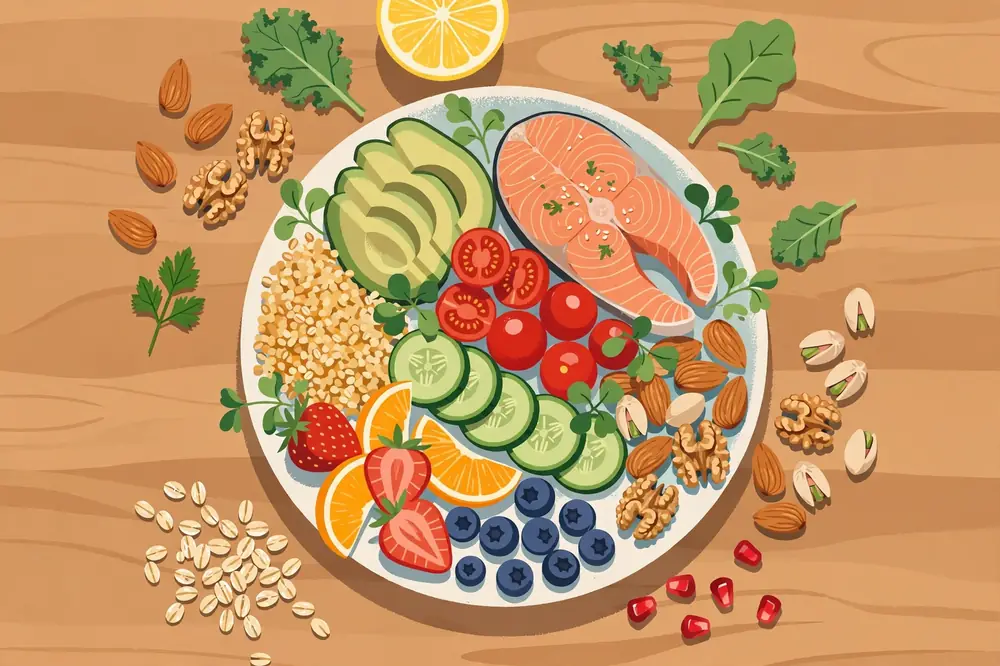
Healthy eating does not mean a strict diet, expensive superfoods or giving up everything you enjoy. The healthy eating basics are simple, practical and the same in almost every country: eat plenty of vegetables and fruit, choose whole grains, include protein from a variety of sources, and limit salt, free sugars and unhealthy fats. This guide explains each of those basics in plain language, so you can build meals that nourish you without overthinking every bite.
Contents
⚡ Quick Answer: What Are the Healthy Eating Basics?
Healthy eating basics mean eating a variety of foods each day, with plenty of vegetables and fruit, whole grains, and protein from beans, fish, eggs or lean meat, while limiting salt, free sugars and unhealthy fats. The World Health Organization recommends at least 400 grams of fruit and vegetables a day (about five portions), less than 5 grams of salt, free sugars below 10% of your daily energy, and total fat below 30% of daily energy. Drink mostly water, and aim for a balanced plate rather than a perfect diet — small, steady changes work best.
What Is Healthy Eating?
A healthy diet is a pattern of eating, not a single food or a single meal. The World Health Organization describes healthy diets using four core principles: adequacy, balance, moderation and diversity. Adequacy means getting enough of the nutrients your body needs. Balance means the right proportions of different food groups. Moderation means not overdoing any one thing, especially salt, sugar and fat. Diversity means eating a wide variety of foods, because no single food provides everything.
That framing is liberating: there is no one perfect menu. Healthy eating looks different in different cultures, and it should fit your age, your health, your budget and your everyday life. The Mediterranean way of eating — plenty of vegetables, olive oil, fish, beans and whole grains — is one well-studied example, but the same principles work with South Asian, East Asian, African or Latin American cooking. What matters is the overall pattern over weeks and months, not any single meal. A balanced healthy diet protects against obesity, heart disease, stroke, diabetes and some cancers, according to the WHO.
Vegetables and Fruit: The Foundation
Vegetables and fruit are the foundation of healthy eating basics. They are low in calories, high in fibre, and rich in vitamins, minerals and plant compounds that protect your health. The WHO recommends at least 400 grams of fruit and vegetables a day for adults — roughly five portions. That is about 80 grams per portion: a medium banana, an apple, a handful of grapes, three heaped tablespoons of cooked vegetables, or a small bowl of salad.
Variety matters as much as quantity. Different colours usually mean different nutrients: orange carrots and sweet potatoes are rich in beta-carotene, dark leafy greens provide folate and calcium, red tomatoes supply lycopene, and berries are packed with antioxidants. Aim to eat a rainbow across the week. Fresh is great, but frozen and canned vegetables and fruit count too, as long as they have no added sugar or excess salt. Starchy vegetables such as potatoes do not count toward the five portions in most guidance, because they behave more like a starchy staple than a vegetable. Fruit juice, even when unsweetened, contains a lot of free sugars, so it is best limited to a small glass a day — or skipped in favour of the whole fruit.
Whole Grains and Fibre
Whole grains are grains that keep all three parts of the kernel: the bran, the germ and the endosperm. That means more fibre, more B vitamins and more minerals than refined grains such as white bread, white rice and many breakfast cereals. The WHO recommends that carbohydrates come primarily from whole grains, vegetables, fruit and pulses, and that adults aim for at least 25 grams of dietary fibre a day.
Fibre does more than keep digestion regular. It helps you feel full, slows the rise of blood sugar after meals, feeds the friendly bacteria in your gut, and is linked to a lower risk of heart disease and bowel cancer. Easy swaps include wholemeal bread instead of white, brown rice instead of white rice, oats or wholegrain cereal for breakfast, and adding beans or lentils to soups and stews. Read labels: the words “wholegrain” or “wholemeal” should come first in the ingredients list. If a product is mostly refined flour with a sprinkling of bran, it is not the real thing. Our Health section has more guides on everyday wellbeing.
Protein: How Much and From Where
Protein builds and repairs your muscles, skin, blood and organs, and it helps you feel full after a meal. Most adults need roughly 0.8 grams of protein per kilogram of body weight a day, though people who are very active or older may benefit from a little more. For a 70-kilogram adult, that is about 56 grams a day — roughly a palm-sized portion of chicken, a piece of fish, a cup of lentils and a pot of yoghurt across the day.
Variety is the key. Good sources include beans, lentils and chickpeas, fish (especially oily fish such as salmon, mackerel and sardines, which also provide omega-3 fats), eggs, dairy, poultry, nuts and seeds, and lean red meat in modest amounts. Plant proteins are valuable because they come packaged with fibre and little saturated fat, and they are cheaper and more sustainable than meat. Try to eat fish twice a week, one portion of it oily, and to have at least a couple of meat-free days a week built around beans, lentils or tofu. Processed meats such as bacon, sausages and salami are best kept occasional, as they are high in salt and saturated fat and are linked to a higher risk of bowel cancer.
Fats: Choosing the Right Kinds
Fat is not the enemy — your body needs it for energy, for absorbing vitamins A, D, E and K, and for building healthy cells. What matters is the type of fat. The WHO advises keeping total fat below 30% of daily energy, with saturated fat below 10% and industrially produced trans fat below 1%. Unsaturated fats, found in olive oil, rapeseed oil, nuts, seeds, avocado and oily fish, are the healthier choice and can help the heart. Saturated fats, found in butter, ghee, lard, coconut oil, palm oil, fatty meat and full-fat dairy, raise blood cholesterol and are best limited.
Practical swaps make a real difference: cook with olive or rapeseed oil instead of butter, choose lower-fat dairy, trim visible fat from meat, and snack on a small handful of unsalted nuts instead of crisps. Avoid deep-fried food most of the time, and check labels for “partially hydrogenated oils” — a sign of trans fats. For a deeper look at how fats fit into overall nutrition, see the article on nutrition on Wikipedia — and if you want more practical healthy habits, browse our Lifestyle category, which covers everyday wellbeing alongside Health.
Salt and Sugar: How Much Is Too Much?
Salt is the quietest problem in the modern diet. Most of the salt we eat is already in processed food — bread, cheese, sauces, ready meals and cured meats — rather than added at the table. The WHO recommends less than 5 grams of salt a day for adults (about one teaspoon, or less than 2 grams of sodium), yet many people eat nearly double that. Too much salt raises blood pressure, which increases the risk of heart disease and stroke.
Cutting back is easier than it sounds: taste food before adding salt, cook with herbs, spices, lemon and garlic instead, choose lower-salt versions of bread, cheese and sauces, and eat processed foods less often. With sugar, the target is free sugars — sugars added by manufacturers, cooks or consumers, plus those naturally present in honey, syrups and fruit juices. The WHO advises keeping free sugars below 10% of your daily energy, ideally below 5%, which is about 25 grams (six teaspoons) a day on a 2,000-calorie diet. Sugary drinks are the biggest source, so swapping them for water is the single most effective change. Sugars inside whole fruit are different: they come with fibre and are digested slowly, so whole fruit is not a concern.
Drinks and Hydration
Water is the best drink — it has no calories, no sugar and no downside. Most adults need around six to eight glasses of fluid a day, more in hot weather or after exercise, and food contributes some of that. Tea and coffee count toward fluid intake, but keep them unsweetened and avoid too much caffeine late in the day, since it can disturb sleep.
Alcohol is best kept to a minimum: it is high in calories, disrupts sleep, and increases the risk of several cancers and liver disease. Sugary drinks — fizzy drinks, energy drinks, sweetened teas and many fruit juices — add calories without nutrition and are linked to weight gain and tooth decay. If you like fizz, sparkling water with a slice of lemon or cucumber is a refreshing, sugar-free alternative. Milk and unsweetened plant milks provide calcium and protein and are a reasonable part of a healthy diet.
Building a Healthy Plate
A simple way to put the healthy eating basics together is the plate method: fill half your plate with vegetables and salad, a quarter with protein (fish, beans, eggs, chicken or tofu), and a quarter with a starchy food — ideally wholegrain — such as brown rice, wholemeal bread, oats or potatoes with their skins. Add a small amount of healthy fat, for example a drizzle of olive oil or a few nuts, and a piece of fruit for dessert.
This model, similar to the well-known Eatwell Guide and the Harvard Healthy Eating Plate, works for breakfast, lunch and dinner. Breakfast might be oats with berries and yoghurt. Lunch could be a wholemeal sandwich with salad and a piece of fruit. Dinner could be grilled fish, brown rice and a big serving of vegetables. The proportions matter more than the specific foods. If half your plate is usually vegetables, you are already doing most of the work.
Simple Healthy Eating Tips
- Plan your week. A loose meal plan and a shopping list cut impulse buys and waste.
- Cook at home more often. Home cooking gives you control over salt, sugar and fat.
- Stock the basics. Keep oats, tinned beans, lentils, frozen vegetables, eggs, rice and spices on hand.
- Eat slowly and mindfully. It takes about 20 minutes for your brain to register fullness.
- Do not skip meals. Regular meals prevent the extreme hunger that leads to overeating.
- Read labels. Check sugar, salt, saturated fat and fibre per 100 grams, not just per serving.
- Keep treats as treats. Biscuits, cake and takeaways can be part of life — as occasional pleasures, not daily staples.
- Be patient. Healthy eating is a long-term pattern. One indulgent meal does not undo a week of good choices.
Healthy eating basics are not a punishment. They are a way of eating well, enjoying food, and giving your body what it needs to work properly for decades. Start with one change — an extra portion of vegetables, a glass of water instead of a fizzy drink, a wholegrain swap at breakfast — and build from there. Small changes, repeated every day, are the ones that last. If you have a medical condition such as diabetes, coeliac disease or a food allergy, talk to your GP or a registered dietitian for advice tailored to you.
Frequently Asked Questions
How many portions of fruit and vegetables should I eat each day?
At least five portions, or about 400 grams, for adults. A portion is roughly 80 grams — a medium piece of fruit, a small bowl of salad, or three heaped tablespoons of cooked vegetables. Variety across the week matters too.
Are frozen and canned vegetables as healthy as fresh ones?
Yes. Frozen vegetables are usually frozen soon after picking, so they keep most of their nutrients. Canned vegetables and fruit count too, as long as they are in water or juice with no added sugar or excess salt.
Do I need to cut out all sugar?
No. The advice is to limit free sugars (added sugars, honey, syrups and fruit juice) to under 10% of daily energy, ideally under 5%. Sugars inside whole fruit are fine, because they come with fibre and are digested slowly.
Is fat bad for you?
Not all fat. Unsaturated fats from olive oil, nuts, seeds, avocado and oily fish are healthy and your body needs them. Saturated and trans fats should be limited, because they raise blood cholesterol and the risk of heart disease.
How can I eat healthily on a budget?
Cook from scratch with beans, lentils, eggs, oats, frozen vegetables and seasonal produce — all are cheap and nutritious. Plan meals, buy in bulk where it makes sense, and waste less food by using leftovers creatively.
Note: This article is general nutrition information, not personal medical advice. If you have a medical condition or specific dietary needs, consult your GP or a registered dietitian.