
Marvin Ellison And Greg Garland
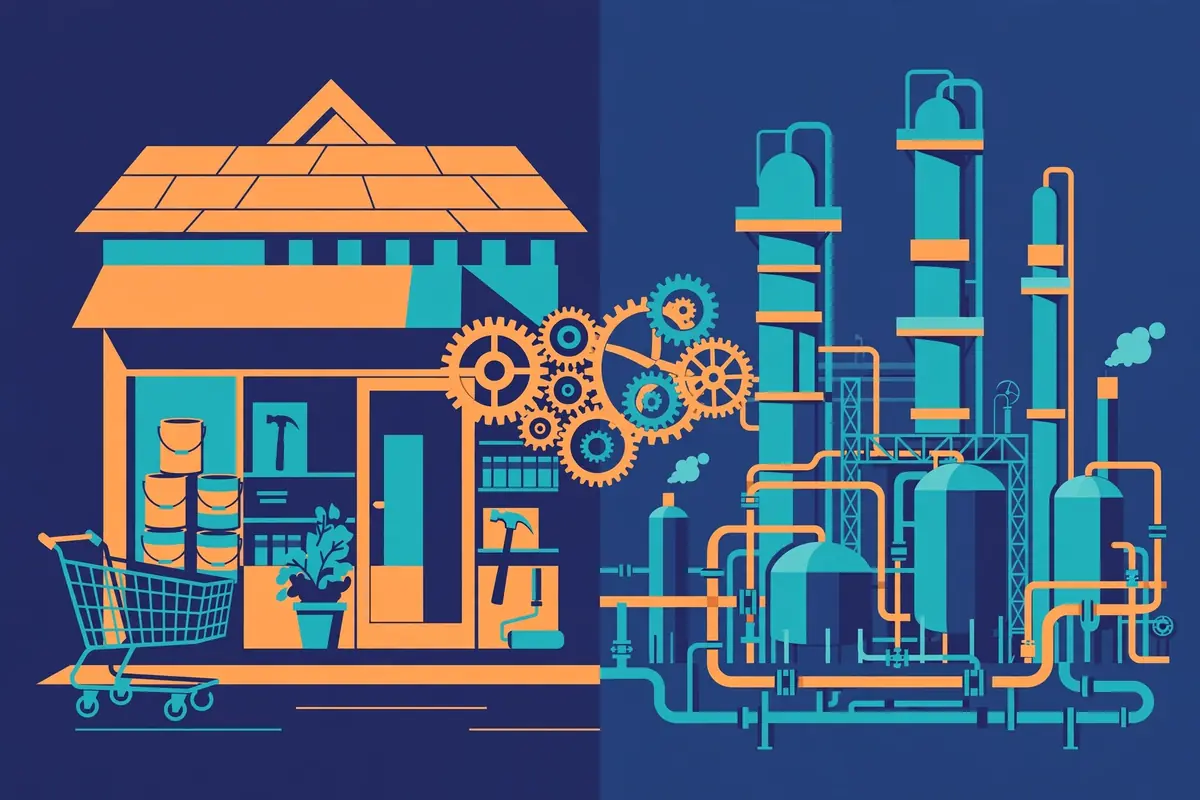
Marvin Ellison and Greg Garland are two of the most recognisable chief executives in American business, yet they built their reputations in completely different industries. Ellison is a retail leader whose name is tied to Lowe’s, J.C. Penney and Home Depot, while Garland spent four decades in energy, rising to the top of Phillips 66. Their names appear together in search results because both men ran huge public companies — but is there any real connection between them, and what can their careers teach us?
Table of Contents
- Quick Answer: Are Marvin Ellison and Greg Garland Connected?
- Marvin Ellison and Greg Garland at a Glance
- Who Is Marvin Ellison?
- Who Is Greg Garland?
- Marvin Ellison and Greg Garland: Careers Compared
- How Their Leadership Styles Differ
- What Business Owners Can Learn From Their Careers
- Frequently Asked Questions About Marvin Ellison and Greg Garland
⚡ Quick Answer: Are Marvin Ellison and Greg Garland Connected?
No. There is no reliable public evidence that Marvin Ellison and Greg Garland have worked together, invested together or share any personal or professional relationship. Ellison is a retail executive who became chairman and chief executive officer of Lowe’s in 2018, and Garland is an energy executive who led Phillips 66 as chairman and CEO from 2012. Their careers run in separate industries — home improvement retail on one side, oil, gas and chemicals on the other — and their names appear together only because search engines pair well-known business leaders in comparison content.
Marvin Ellison and Greg Garland at a Glance
Before looking at each career in detail, here is the essential comparison in one place.
| Detail | Marvin Ellison | Greg Garland |
|---|---|---|
| Primary industry | Retail and home improvement | Energy, refining and chemicals |
| Best known for | Chairman and CEO of Lowe’s | Chairman and CEO of Phillips 66 |
| Career start | Retail operations, rising through store management | Engineering at Phillips Petroleum in 1980 |
| Other major roles | CEO of J.C. Penney; senior roles at Home Depot | CEO of Chevron Phillips Chemical; senior roles at ConocoPhillips |
| Education | Business administration | Chemical engineering, Texas A&M University (1980) |
| Professional focus | Store operations, customer experience and merchandising | Refining, chemicals and corporate strategy |
| Current status | Leading Lowe’s | Former Phillips 66 chairman; left the board in 2024 |
Who Is Marvin Ellison?
Marvin Ellison is one of the most experienced retail executives in the United States. His career is a classic store-to-boardroom story: he learned retail from the shop floor upwards, spending years in store operations before taking senior corporate roles. That grounding in day-to-day retail is the thread that runs through everything he has done since.
Marvin Ellison: Retail Roots at Home Depot
Ellison spent many years at Home Depot, where he built his reputation as an operations leader. Home Depot is the largest home improvement retailer in the world, and working there gave him a deep education in the things that decide whether a big retailer succeeds: keeping the right products in stock, running stores efficiently, training large teams and serving both everyday homeowners and professional tradespeople. By the time he left, he was one of the company’s most senior operations executives, with responsibility for a vast network of stores and the people who run them.
That experience mattered because home improvement retail is unforgiving. A store that runs out of a popular product loses the sale to a competitor the same day. A store with badly trained staff loses customers for good. Ellison’s years inside that world taught him that retail success is decided on the shop floor, not in the boardroom — a lesson he carried into every chief executive role that followed.
Marvin Ellison: The J.C. Penney Years
Before joining Lowe’s, Ellison served as chairman and chief executive officer of J.C. Penney, one of America’s best-known department store chains. It was a very different challenge from Home Depot. J.C. Penney was struggling with falling sales and an identity crisis, and Ellison’s job was to steady a business that had lost its way with customers. His time there showed the other side of retail leadership: not just running a successful operation, but trying to repair one.
The J.C. Penney role also widened his experience beyond home improvement. Department stores live or die on fashion, seasons and promotions, which demand different instincts from selling lumber and power tools. Ellison’s willingness to take on a turnaround job — a role many executives avoid because the odds of failure are high — says something about how he views his own career: as a test of whether operational discipline can fix a broken business.
Marvin Ellison: Leading Lowe’s Since 2018
Ellison became chairman and chief executive officer of Lowe’s in 2018, returning to the home improvement world he knew best. At Lowe’s he has focused on the fundamentals that defined his earlier career: improving store operations, strengthening the supply chain, growing the professional customer business and developing digital services so that online shopping connects smoothly with physical stores. Under his leadership, Lowe’s has concentrated on doing the basics better — reliable stock, helpful staff and a shopping experience that works for both homeowners and contractors.
His appointment also made him one of the very few Black chief executives of a Fortune 500 company, and he has spoken publicly about the importance of opening doors for others in retail leadership. That part of his story matters to many readers, because the boardrooms of large American companies still do not reflect the diversity of the workforces they lead.
Who Is Greg Garland?
Greg Garland is an energy industry executive whose career runs in the opposite direction from Ellison’s — from engineering into the boardroom, rather than from the shop floor. He spent more than forty years in oil, gas and chemicals, and his name is most closely associated with Phillips 66, the American energy company he led for a decade.
Greg Garland: From Engineer to Executive
Garland received a bachelor’s degree in chemical engineering from Texas A&M University in 1980 and joined Phillips Petroleum the same year. His early roles were technical: he worked as an engineer at the company’s plastics technical center, then as a sales engineer for plastics resins, before moving into management of advanced materials and chemicals businesses. It was a slow, deliberate climb through the technical side of the industry, and it gave him a working understanding of the plants, processes and products he would later oversee as a chief executive.
Over the following decades he held a string of senior roles. From 1992 to 1994 he managed the K-Resin business at Chevron Phillips Chemical. From 1995 to 1997 he was general manager of natural gas liquids, and from 1997 he was general manager for Qatar and the Middle East — an international posting that widened his view of the global energy business. From 2000 to 2001 he was senior vice president of planning and strategic transactions, and from 2001 to 2008 he was senior vice president of planning and specialty products and chemicals. In 2008 he became chief executive officer of Chevron Phillips Chemical, a role he held until 2011.
Greg Garland: Building Phillips 66
Garland’s most prominent role began in April 2012, when he became chairman and chief executive officer of Phillips 66, the company created when ConocoPhillips separated its downstream businesses — refining, marketing, transportation and chemicals — into a standalone company. Leading a newly independent company is a particular kind of challenge: the business had to establish its own identity, its own systems and its own strategy, all while running refineries and chemical plants that cannot simply be switched off.
Under Garland, Phillips 66 developed into a major integrated downstream energy company. His responsibilities included overseeing refining operations, chemicals, pipelines and marketing, and guiding investment decisions across businesses that are heavily shaped by commodity prices, safety regulation and long-term shifts in energy demand. He led the company as chairman and CEO until 2022, when he stepped down as chief executive, and he subsequently served as executive chairman from 2022 to 2024. He has also served as a director of Amgen since 2013, and he has sat on the boards of the American Petroleum Institute and the National Petroleum Council.
Greg Garland: Life After the CEO Role
Garland left the Phillips 66 board in 2024, closing a career that had lasted more than four decades with the same corporate family. His later years in the industry were spent as much on the sector’s institutions as on any single company: industry boards, trade associations and university advisory work, including the Engineering Advisory Board at Texas A&M University. He is married with four children. His career stands as an example of the long, specialist route to the top of a capital-intensive industry — four decades of technical and managerial roles inside one sector, ending with a decade at the helm of a major public company.
Marvin Ellison and Greg Garland: Careers Compared
Put side by side, the two careers look like mirror images of American executive life. Ellison climbed through retail, where success is measured in same-store sales, customer satisfaction and inventory turns. Garland climbed through energy, where success is measured in refinery reliability, safety, capital discipline and returns over investment cycles that can last decades. Both men reached the top of large public companies — but the skills that got them there were shaped by very different industries.
| Comparison area | Marvin Ellison | Greg Garland |
|---|---|---|
| Route to the top | Store operations and retail management | Chemical engineering and technical management |
| Company scale | Thousands of stores and hundreds of thousands of employees | Refineries, chemical plants and pipelines |
| Main customer | Homeowners and professional tradespeople | Energy buyers, industrial customers and commercial partners |
| Key pressure | Consumer spending, pricing and retail competition | Commodity prices, regulation and energy demand |
| Decision horizon | Weeks and quarters — seasons, promotions, stock | Years and decades — plants, pipelines, portfolios |
| Defining job | Chairman and CEO of Lowe’s (from 2018) | Chairman and CEO of Phillips 66 (2012–2022) |
The comparison also shows why there is little value in ranking one above the other. A retail chief executive who misjudges a season loses sales immediately; an energy chief executive who misjudges an investment can lock a company into a bad asset for twenty years. Both jobs are hard, but they are hard in different ways, and the measure of each man is how well he performed against the standards of his own industry.
If you enjoy these cross-industry executive comparisons, you may also like our look at Greg Garland and Marvin Ellison, which tells the same story with the names in the opposite order, or Ted Sarandos and Vicki Hollub, another pairing of leaders from unrelated industries. For a closer look at retail leadership, see Mary Barra and David Cordani.
How Their Leadership Styles Differ
The most important difference between Marvin Ellison and Greg Garland is not personality — it is the rhythm of the businesses they run. Retail is a weekly game. A store manager knows by Monday whether the weekend went well. An executive like Ellison lives close to that rhythm: store visits, sales data, stock levels and customer feedback arrive constantly, and decisions can be tested and corrected quickly. That closeness to the customer is the defining feature of retail leadership, and it rewards executives who are comfortable with detail and with being on the ground.
Energy leadership moves at a different speed. A refinery investment decided today may not pay off for a decade, and a chemical plant cannot be redesigned on a whim. Garland’s career rewarded patience, technical judgment and discipline about capital: the ability to judge which long-term bets were worth making, and to keep operations safe and reliable in the meantime. His background as a chemical engineer gave him the vocabulary to challenge his own technical teams, which matters in an industry where the chief executive must understand the assets, not just the accounts.
Both styles share a common foundation, though. Each man spent decades learning his industry from the inside before reaching the top, and each built his reputation on operational competence rather than on deal-making or self-promotion. That is the real lesson of the pairing: in both retail and energy, the leaders who last are the ones who understand how the business actually works.
What Business Owners Can Learn From Their Careers
There are practical lessons here for anyone running a business, whatever its size. First, understand your industry deeply. Ellison knows retail because he worked in stores; Garland knows energy because he worked in plants. Neither man arrived at the top as an outsider with a generic management playbook.
Second, match your decisions to your time horizon. A retailer who plans like an oil company will move too slowly; an energy company that plans like a retailer will underinvest in assets that take years to build. The right planning horizon is set by the business, not by the executive.
Third, focus on operational performance. Strategy matters, but both careers show that execution is what keeps a company alive — reliable stores on one side, reliable plants on the other. And fourth, build strong teams. Neither Lowe’s nor Phillips 66 can be run by one person, and both men’s success depended on the managers and workers below them doing their jobs well.
For the full background on each man, the Greg Garland Wikipedia page covers his education and career in detail, the Phillips 66 Wikipedia page explains the company he led, and the Lowe’s Wikipedia page covers the retailer Ellison runs. Note that Marvin Ellison does not currently have a dedicated Wikipedia article, so company pages and business reporting are the best sources for his career. You can also browse public discussion of the pairing on Reddit’s search results for Marvin Ellison and Greg Garland, keeping in mind that forum posts are opinions, not evidence.
Frequently Asked Questions About Marvin Ellison and Greg Garland
Are Marvin Ellison and Greg Garland related?
No. There is no reliable public evidence of any family relationship between them. They come from different backgrounds, work in different industries and have no documented personal connection.
Have Marvin Ellison and Greg Garland ever worked together?
No. There is no record of the two men sharing an employer, a business partnership or a joint venture. Ellison’s career has been entirely in retail, while Garland’s has been entirely in energy and chemicals.
What company does Marvin Ellison lead?
Marvin Ellison is chairman and chief executive officer of Lowe’s, the home improvement retailer, a role he has held since 2018. Before that he was chairman and CEO of J.C. Penney and spent many years in senior roles at Home Depot.
What company did Greg Garland lead?
Greg Garland was chairman and chief executive officer of Phillips 66 from April 2012 until 2022, and he then served as executive chairman from 2022 to 2024. Earlier in his career he was CEO of Chevron Phillips Chemical and held senior roles at ConocoPhillips.
Who is richer, Marvin Ellison or Greg Garland?
Publicly reported estimates vary and neither man’s personal wealth is reliably established in public sources, so a direct comparison would be guesswork. Both men have been well paid as chief executives of large public companies, but salary and net worth are different measures, and online wealth figures for executives should be treated with caution.
In the end, Marvin Ellison and Greg Garland are a reminder that leadership takes different forms in different industries. One man learned his trade in stores, the other in chemical plants, and both reached the top by mastering the details of the business they were in. Their names appear together in search results, but their careers belong to two separate stories — and each story is worth reading on its own.
