
How to Improve Your Posture
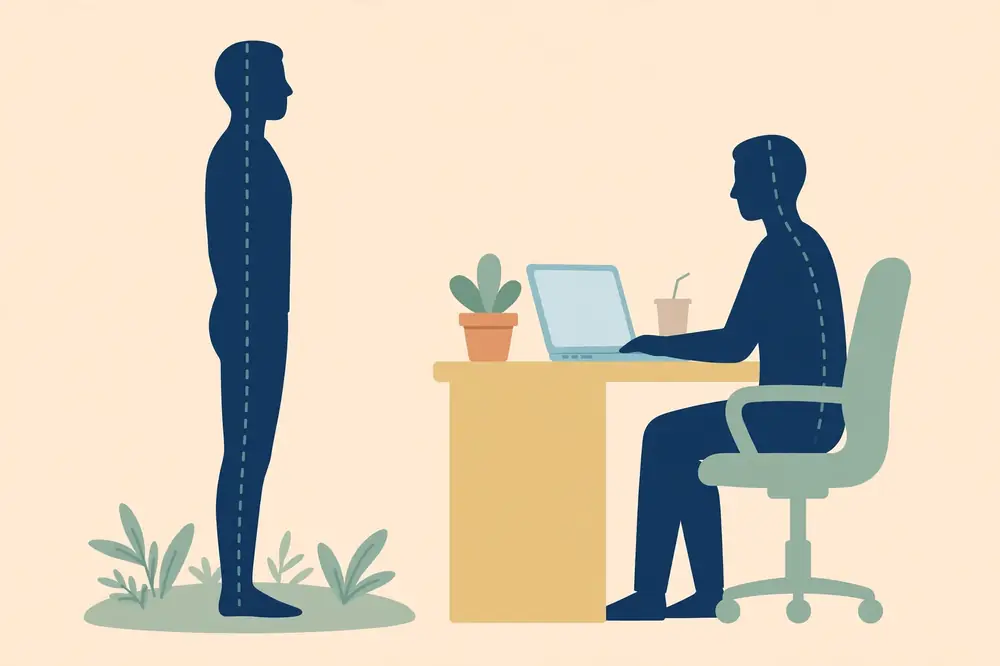
Posture is the way you hold your body when you sit, stand and move. Good posture means your bones are lined up so your muscles, joints and ligaments work with the least strain — your head balanced over your shoulders, your shoulders over your hips, and your weight spread evenly through your feet. Bad posture, such as slouching at a desk or hunching over a phone, puts extra load on your muscles and joints, and over time it can cause neck pain, back pain, headaches and tiredness. The good news is that posture is a habit, and habits can be changed. This guide explains how to improve your posture at your desk, on your feet and in daily life, with simple exercises that actually work.
Contents
⚡ Quick Answer: How to Improve Your Posture
To improve your posture, sit with your back supported, feet flat on the floor and screen at eye level; stand tall with your weight even on both feet and your shoulders back and relaxed; and strengthen your core and upper back with exercises such as chin tucks, shoulder blade squeezes, bridges and planks. Take a short movement break every 30 minutes, keep your phone at eye level instead of looking down, and be patient — new posture habits take weeks of gentle practice, not a single day of forcing yourself upright.
What Is Good Posture?
Good posture is not standing rigidly to attention. It is the position that puts the least strain on your body: when you stand, your ear, shoulder, hip, knee and ankle should form roughly a straight line; when you sit, your back should be supported, your feet flat on the floor, and your head balanced over your shoulders rather than poking forward. Imagine a string attached to the top of your head, near the back, gently pulling you upwards — that image alone helps many people find a taller, easier position.
Posture changes throughout the day, and no single position is perfect for hours on end. The healthiest approach is often described as “the best posture is the next posture”: keep changing position, stand up regularly, walk around, and stretch. Good posture is a moving target, not a statue. For the formal definition, see the posture article on Wikipedia.
Why Posture Matters
Good posture matters for several reasons. First, it reduces strain: when your body is aligned, your muscles do not have to work overtime to hold you up, so you tire less and ache less. Second, it protects your spine — the discs and joints in your back last longer when loads are spread evenly. Third, it helps you breathe: slouching compresses your chest, while sitting tall lets your lungs expand fully. And fourth, it affects how you feel: research has linked upright posture with better mood and confidence, while a hunched position is associated with feeling low and tired.
Poor posture, on the other hand, is a common cause of the aches many people accept as normal: neck stiffness after a day at a laptop, lower back pain after a long drive, headaches that start at the base of the skull, and shoulder pain from rounded shoulders. None of these are inevitable. They are usually signs that muscles have become weak or tight from habits, and habits can be changed with the right exercises and a little patience.
Common Posture Mistakes
The NHS and physiotherapists identify several everyday mistakes that most of us make. Slouching in a chair feels comfortable, but over time it strains the muscles and sensitive tissues of the back. Rounding the shoulders forward — common in people who work at computers — tightens the chest and weakens the upper back. Leaning on one leg while standing feels relaxing, but it puts uneven pressure on the lower back and hip and can create muscle imbalances. Text neck — looking down at a phone for long periods — loads the neck with far more weight than it is designed to carry. And craning the neck forward at a screen (“poking chin”) is one of the most common causes of neck pain.
Spot your own habits before trying to fix them. Notice when you slouch: is it when you are tired, bored, or deep in thought? Do you always lean on the same leg? Where is your phone when you read it? Once you know your patterns, you can set reminders — a sticky note on your monitor, an hourly phone alarm to stretch, or a rule that you only read your phone at eye level. You will find more everyday wellbeing advice in our Health category.
How to Sit Well
Most of us sit for hours a day, so sitting well matters. Sit with your bottom right at the back of the chair, so the chair supports the natural curve of your lower back — use a small rolled towel or a lumbar cushion if your chair does not support you. Keep your feet flat on the floor (or on a footrest), with your hips, knees and ankles at roughly 90 degrees. Relax your shoulders down and away from your ears, and keep your head balanced over your shoulders with your chin slightly tucked in, so your earlobes sit above your shoulders.
Then move. Aim to stand up and move at least every 30 minutes — stand while you take a call, walk to get water, or do a gentle stretch. Changing position regularly matters more than sitting perfectly. Avoid sitting on a soft sofa for long periods of work: a firm chair with a straight back is much better for your spine. And when you drive, adjust your seat so you can see clearly without leaning forward, and take a break to stretch on long journeys.
Setting Up Your Desk
A good desk setup makes good posture almost automatic. The NHS advises that your lower back should be properly supported by adjusting your chair correctly, that your feet should rest flat on the floor, and that your computer screen should be at eye level to prevent hunching. Your keyboard should sit about 10 to 15 centimetres (4 to 6 inches) in front of you so your wrists can rest between typing, and your mouse should be close enough that you do not have to reach for it.
Other practical checks: your elbows should rest at roughly 90 degrees when you type; your screen should be about an arm’s length away; if you use a laptop, raise it on a stand or a stack of books and use a separate keyboard and mouse; and if you often cradle a phone between your head and neck, switch to a headset or use speakerphone. Keep the things you use most within easy reach so you are not twisting to get them. If you work from home, a small investment in a chair with adjustable height and lumbar support pays for itself in comfort. For a checklist approach, see the ergonomics guide on Wikipedia.
Standing and Walking Well
Good standing posture is simple to practise: stand tall with your feet hip-width apart, your weight evenly spread through both feet, your knees soft (not locked), your tailbone tucked gently under, and your tummy muscles lightly drawn in so you feel a slight inward curve at the base of your spine. Lengthen your spine, keep your shoulders down and relaxed, look straight ahead, and tuck your chin in slightly so your earlobe lines up with your shoulder.
When you walk, let your arms swing naturally, look ahead rather than down at your feet, and land on your heel, rolling through to your toes. Avoid carrying heavy bags on one shoulder — use a backpack with both straps, or swap sides regularly. Wear supportive shoes: very high heels tip your body forward and increase the strain on your lower back, while flat shoes with no support can also cause problems. If you stand all day at work, ask about anti-fatigue mats and alternate standing with walking when you can. Regular walking also supports your overall fitness — see the movement guides in our Health section for why movement matters so much.
Exercises to Improve Your Posture
The best way to improve your posture is to strengthen the muscles that hold you upright — mainly the core (abdomen and lower back), the upper back and the muscles between the shoulder blades — and to stretch the muscles that have become tight, especially the chest and the front of the neck. Yoga and pilates are excellent for this, because they target the core with slow, controlled movements. Swimming is also recommended, because good posture is essential to swimming well. Here are simple exercises you can do at home, two or three days a week:
- Chin tucks. Sitting or standing, pull your chin back towards the back of your neck as if making a double chin. Hold for two seconds and repeat ten times. This strengthens the deep neck muscles and corrects a forward head position.
- Shoulder blade squeezes. Sit upright and move your shoulder blades down and back, as if tucking them into your back pockets. Hold for five seconds and repeat ten times.
- Chest stretch. Stand in a doorway, place your forearms on the frame, and step gently forward until you feel a stretch across your chest. Hold for 20 seconds.
- Bridges. Lie on your back with knees bent, lift your hips until your body forms a straight line from shoulders to knees, squeeze your glutes, hold for five seconds and lower. Repeat ten times.
- Plank. Hold a straight line from head to heels on your forearms and toes for 20 to 30 seconds. Keep your core tight and your hips level. Build up gradually.
- Back extensions. Lying face down, gently lift your chest off the floor using your back muscles, keeping your neck long. Lower slowly. Repeat ten times.
Start gently, breathe normally during each exercise, and stop if anything causes sharp pain. If you have had spinal fractures, talk to your GP or physiotherapist before starting new exercises — the Royal Osteoporosis Society publishes posture exercises designed for people with fragile bones, and a physiotherapist can adapt them to your needs.
Sleep, Phones and Everyday Habits
Posture does not stop when you lie down. Sleep on a mattress that supports you — too soft and your spine sags, too firm and it cannot curve naturally. Side sleepers often do well with a pillow that fills the gap between ear and shoulder; back sleepers need a thinner pillow; stomach sleeping is the hardest on the neck and back. When you lift something heavy, bend your knees and keep the object close to your body rather than bending from the waist.
Your phone is the biggest everyday threat to good posture. Raise it to eye level when you read or scroll, and take regular breaks. The same goes for tablets and books. When you watch television, sit with your back supported rather than slumped sideways. None of these habits requires willpower all day — set up your environment so the easy choice is the good one, and the rest takes care of itself. If you are working on overall wellbeing, our Health section has more practical guides.
When to Get Professional Help
Most posture problems improve with the habits and exercises in this guide, but some need professional help. Speak to your GP if pain persists for more than a few weeks despite your efforts, if you have numbness or tingling in your arms or legs, if pain follows an injury or a fall, or if you notice a visible change in the shape of your spine. Your GP may refer you to a physiotherapist, who can assess your posture, identify which muscles are weak or tight, and give you an exercise programme tailored to you. A chiropractor or osteopath can also assess and advise, but for long-term change, strengthening exercises are the key — no single treatment fixes posture on its own.
Posture improves with patience, not perfection. You will not fix years of slouching in a weekend, and you do not need to. A better chair, a screen at eye level, a phone held higher, a few minutes of core work most days, and regular movement breaks — these small changes add up. Within a few weeks, standing tall starts to feel natural rather than forced, and the aches that felt normal start to fade. That is your body telling you the new habit is working.
Frequently Asked Questions
How long does it take to improve your posture?
Most people notice a difference within a few weeks of regular practice, though deep habit change can take a couple of months. Consistency matters more than intensity — a few minutes of exercises and regular movement breaks each day work better than an occasional long session.
Is bad posture actually harmful?
Poor posture itself is not a disease, but it increases strain on muscles and joints and is a common cause of neck pain, back pain and headaches. Improving it usually reduces those symptoms and helps you feel less tired.
Do posture corrector braces work?
Braces can remind you to sit up, but they can also make your muscles lazy if you rely on them. Exercises that strengthen your own muscles are more effective in the long term. Use a brace only as a short-term reminder, not a substitute for exercise.
Can sleeping position affect posture?
Yes. A mattress that is too soft lets your spine sag, and a pillow that is too thick or too thin can strain your neck. Side sleepers usually need a firmer, thicker pillow; back sleepers a thinner one. Avoid sleeping on your stomach if you can.
When should I see a doctor about posture?
See your GP if pain lasts more than a few weeks, if you have numbness or tingling in your limbs, if pain followed an injury, or if you notice a visible change in your spine. A physiotherapist can give you a tailored exercise plan.
Note: This article is general health information, not personal medical advice. If you have persistent pain, numbness, or a spinal condition, consult a healthcare professional before starting new exercises.
Related: healthy daily habits in Lifestyle