Home Insulation Basics
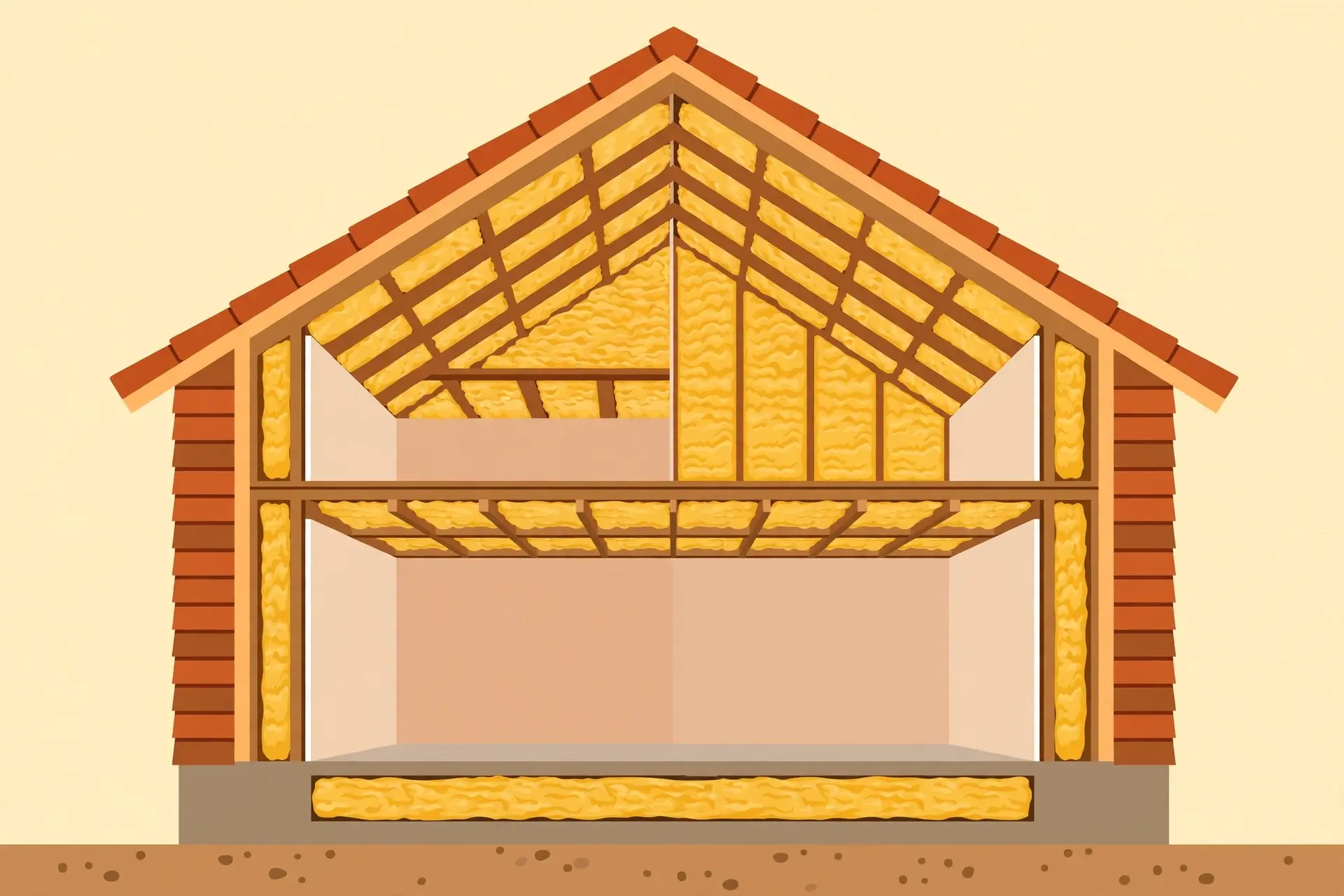
Insulation is one of the least glamorous parts of a home, and one of the most important. It is the material in your walls, attic and floors that slows down the movement of heat — keeping warmth inside in winter and heat out in summer. A well-insulated home is warmer in cold weather, cooler in hot weather, quieter, and cheaper to run. A poorly insulated home wastes energy every single day, and the heating system works harder to make up for it.
This guide covers the basics every homeowner should know: what insulation is and how it works, what R-value means, the main types of insulation and where each one works best, how to tell whether your home needs more, and when to do the work yourself versus calling a professional. For more ways to improve your home, explore our Home Improvement guides.
⚡ Quick Answer: Home Insulation Basics
Home insulation slows heat moving through your walls, attic and floors, and its effectiveness is measured by R-value — the higher the number, the better it insulates. The attic is the most cost-effective place to start, because heat rises and escapes through the roof. The main types are fiberglass batts (about R-3 to R-4.3 per inch), blown-in cellulose (about R-3.2 to R-3.8 per inch), rigid foam boards (about R-4 to R-6.5 per inch) and spray foam (about R-3.7 to R-7 per inch, open-cell at the low end and closed-cell at the high end). Check your attic first: if the insulation sits below or level with the floor joists, you probably need more.
Contents
- Quick Answer: Home Insulation Basics
- How Insulation Works
- Understanding R-Value
- The Main Types of Insulation
- Where to Insulate First
- Signs Your Home Needs More Insulation
- Air Sealing: The Job That Comes Before Insulation
- DIY or Professional Installation?
- Costs and Energy Savings
- Safety and Moisture
- Frequently Asked Questions
How Insulation Works
Heat moves in three ways — conduction, convection and radiation — and insulation works mainly by slowing conduction. Most insulation materials work by trapping tiny pockets of still air inside their structure, and still air is a poor conductor of heat. Fiberglass is made from extremely fine strands of glass woven into a material that traps air; cellulose is made from recycled paper treated with fire retardants; foam is full of tiny sealed bubbles.
Insulation does not create heat or cold, and it does not stop heat moving altogether. It slows the flow, which means your heating system needs less energy to keep the house warm in winter and your home stays cooler in summer. Building insulation covers the materials and methods used to reduce heat transfer in buildings, and the same principles apply whether you are insulating a new build or upgrading an older home.
Understanding R-Value
R-value is the standard measure of thermal resistance: the higher the number, the better the material resists heat flow. R-value per inch varies by material, and your total R-value depends on the thickness you install — a deep layer of fiberglass can match a thinner application of spray foam, because the total is what matters, not the per-inch figure alone.
How much R-value you need depends on your climate zone and where in your home you are insulating. Guidance such as the United States Department of Energy recommendations and the ENERGY STAR targets based on the International Energy Conservation Code sets different attic targets by region — homes in cold northern climates may need an attic R-value up to R-60, while southern homes may only need R-38. In the UK, Building Regulations set minimum U-values (which are the inverse of R-value) for roofs, walls and floors, and your local building control office can confirm what applies to your project. The key point is the same everywhere: colder climates need more insulation, and attics need the most of all.
The Main Types of Insulation
There are five main types of home insulation, and there is no single best one for a whole house — the right choice depends on where you are insulating, how much space you have, and how much moisture the area encounters.
Fiberglass Batts and Rolls
Fiberglass is the familiar pink or yellow blanket material you see in hardware stores. It provides an R-value of about 2.9 to 4.3 per inch, is cost-effective, non-combustible, and easy for homeowners to install between standard wall studs and joists. It is the affordable default for open attics and standard wall cavities. Its weakness is moisture: fiberglass loses effectiveness when wet and can support mould if it stays damp, so it should never be installed where water intrusion is active.
Blown-In Cellulose
Cellulose is made from recycled paper — mostly newspapers — treated with fire retardants, and it is one of the more environmentally low-impact options. It provides an R-value of about 3.2 to 3.8 per inch and is blown into attics or wall cavities with a mechanical blower. It is particularly good at settling into irregularly shaped spaces and blanketing an attic floor to prevent heat bridging across wooden joists. To reach an attic value of R-50 with cellulose you need roughly 13 to 15 inches of depth. Cellulose can settle over time, and it is more vulnerable to moisture than fiberglass, so it should not be installed where water gets in.
Spray Foam
Spray foam starts as a liquid that expands into a solid foam, filling every crack and crevice. Closed-cell spray foam delivers the highest thermal performance per inch — roughly R-6 to R-7 — and resists moisture, making it a strong fit for crawl spaces, rim joists and irregular cavities. Open-cell foam is softer, less expensive and offers about R-3.7 per inch. Spray foam is the only insulation type that air-seals and insulates at the same time, which is why it often delivers larger energy savings in leaky older homes than simply adding more of a cheaper material. It is a premium option and should be installed by a trained professional.
Rigid Foam Board
Rigid foam board is made from dense panels of polystyrene or polyisocyanurate and provides an R-value of about 3.6 to 6.5 per inch, depending on the type. It holds its R-value in damp conditions, which makes it the preferred choice for basement and crawl space walls, where fiberglass batts would compress and lose performance. It also works well as continuous insulation on exterior walls.
Mineral Wool
Mineral wool, also called rock wool, is made from stone fibre. It provides good thermal performance, is naturally fire-resistant, resists moisture better than fiberglass, and is excellent for soundproofing between rooms and floors. It is denser and heavier than fiberglass, which makes it a good choice for walls between bedrooms and living spaces.
Where to Insulate First
The attic is the most cost-effective place to insulate in most homes. Heat rises, and an under-insulated attic lets it escape directly through the roof. For an open, unfinished attic floor, blown-in cellulose and fiberglass batts are the standard choices, because they cover irregular spaces and fit around obstructions like wiring and ductwork.
Walls are the second most significant area. In new construction or major renovations, spray foam or rigid foam board offers superior air sealing. In existing homes, blown-in insulation can be added through small holes drilled in the wall, which are then patched and repainted. Floors over unheated spaces — over a garage, a crawl space or a basement — are worth insulating too, and basements benefit from rigid foam board on the walls because it handles damp conditions well. Thermal insulation works by reducing the transfer of heat between objects, and every surface of your home’s thermal envelope — the boundary between the heated inside and the unheated outside — is a candidate for it.
Signs Your Home Needs More Insulation
Start by looking in your attic. If the insulation rests below or just level with the floor joists, you probably need more — properly insulated attics usually have a thick, even blanket well above the joists. Other signs include rooms that are noticeably colder than the rest of the house in winter or hotter in summer, cold floors and cold walls, and heating bills that keep rising despite similar weather and usage.
Ice dams on the roof edge in winter, which form when heat escaping through the roof melts snow that then refreezes at the eaves, are a classic sign of an under-insulated attic. So are draughts around windows and doors, though those are usually an air-sealing problem rather than an insulation problem. If you are unsure, a professional energy audit — often including a thermal imaging survey — can show exactly where your home is losing heat.
Air Sealing: The Job That Comes Before Insulation
Insulation slows heat moving through materials, but it does not stop air leaking through gaps and cracks — and in many homes, air leakage is as big a problem as thin insulation. Before you add insulation, seal the leaks: gaps around pipes and wiring where they pass through the attic floor, cracks around windows and doors, gaps at the top of wall cavities, and openings around chimneys and loft hatches. Caulk, expanding foam and weatherstripping are cheap and effective.
This matters because insulation that has air blowing through it performs far worse than its rated R-value. A draughty attic with thick insulation can lose more heat than a sealed attic with a thinner layer. The sequence is always the same: seal the air leaks first, then insulate. Some materials, like spray foam, do both jobs at once, which is part of why they perform so well in older, leaky homes.
DIY or Professional Installation?
Fiberglass batts and rolls are the most DIY-friendly insulation: they are cheap, widely available, and easy to cut and fit between standard joists and studs. Blown-in cellulose and fiberglass are also possible to do yourself, because many hardware stores rent the blower machine, though the job is messy and goes faster with two people. Rigid foam board is a straightforward DIY job on flat walls, though cutting it neatly takes practice.
Spray foam should be left to a trained installer — the chemicals need proper handling and protective equipment, and a bad application is expensive to remove. Wall insulation in existing homes is also usually a professional job, because it involves drilling holes in finished walls and filling them correctly. The same goes for anything involving a roof structure or a damp basement: if you find wet insulation, mould, or a roof leak, fix the water problem first and consider professional help. If you are tackling other projects around the house, our Lifestyle section has ideas for making a well-insulated home feel comfortable too.
Costs and Energy Savings
Insulation is one of the rare home improvements that pays for itself in lower energy bills. The attic is usually the cheapest upgrade with the fastest payback, because it is easy to access and needs no demolition. Costs vary widely by material and by country, but fiberglass batts are the cheapest per square foot, blown-in cellulose is moderately priced, rigid foam board costs more, and spray foam is the most expensive option — while also delivering the biggest energy savings in leaky homes.
How much you save depends on how bad the insulation was to begin with: a home going from almost no attic insulation to a properly insulated attic will see a much bigger difference than a home that was already reasonably insulated. Government schemes and energy suppliers sometimes offer grants or subsidies for insulation, particularly for lofts and cavity walls, so check what is available in your area before you buy. Keep records of the material type, thickness and R-value you installed — a buyer or a surveyor will want to know.
Safety and Moisture
Working with insulation needs basic precautions. Fiberglass and mineral wool irritate skin, eyes and lungs, so wear gloves, long sleeves, eye protection and a dust mask, and wash your hands and face when you finish. Work in a well-ventilated space, take breaks in fresh air, and keep insulation away from recessed light fittings unless they are rated for contact with insulation — heat build-up around a light is a fire risk.
Moisture is the other issue. Insulation that gets wet loses performance and can grow mould, so never install insulation over a leak, and make sure bathrooms and kitchens are properly ventilated so damp air does not condense inside the insulation. In attics, insulation must not block the ventilation at the eaves, or condensation will build up on the underside of the roof. When in doubt, ask a professional — insulation mistakes are expensive to undo.
Frequently Asked Questions
What is the best insulation for a home?
There is no single best insulation. Fiberglass batts are the affordable default for attics and walls, blown-in cellulose suits attics and existing walls, spray foam is best for air sealing and irregular spaces, and rigid foam board is the right choice for basements and damp areas. The right choice depends on where you are insulating.
How much insulation do I need in my attic?
It depends on your climate, but as a guide, cold-climate homes may need an attic R-value up to R-60, while milder regions need around R-38. Under the UK’s Building Regulations, loft insulation is typically expected to reach around 270mm of mineral wool. Check the guidance that applies to your region before buying.
Can I add insulation without removing walls?
Yes. Blown-in cellulose or fiberglass can be installed in existing wall cavities through small holes that are then patched and repainted. Attic insulation can be added on top of what is already there, as long as the old insulation is dry and in good condition.
Does insulation help in summer?
Yes. Insulation slows heat in both directions, so it keeps hot air out in summer as well as keeping warm air in during winter. Combined with shading and ventilation, it makes a home noticeably cooler in hot weather.
How long does insulation last?
Most insulation materials last for decades if they stay dry and undisturbed. Cellulose can settle over time and may need topping up in an attic after many years. If insulation has been wet, compressed or damaged by pests, it should be replaced.
To learn more about the materials and physics involved, the Wikipedia article on thermal insulation explains how heat transfer works and how different materials slow it down.