
24/7 Plumber: Emergency Plumber Available Day and Night
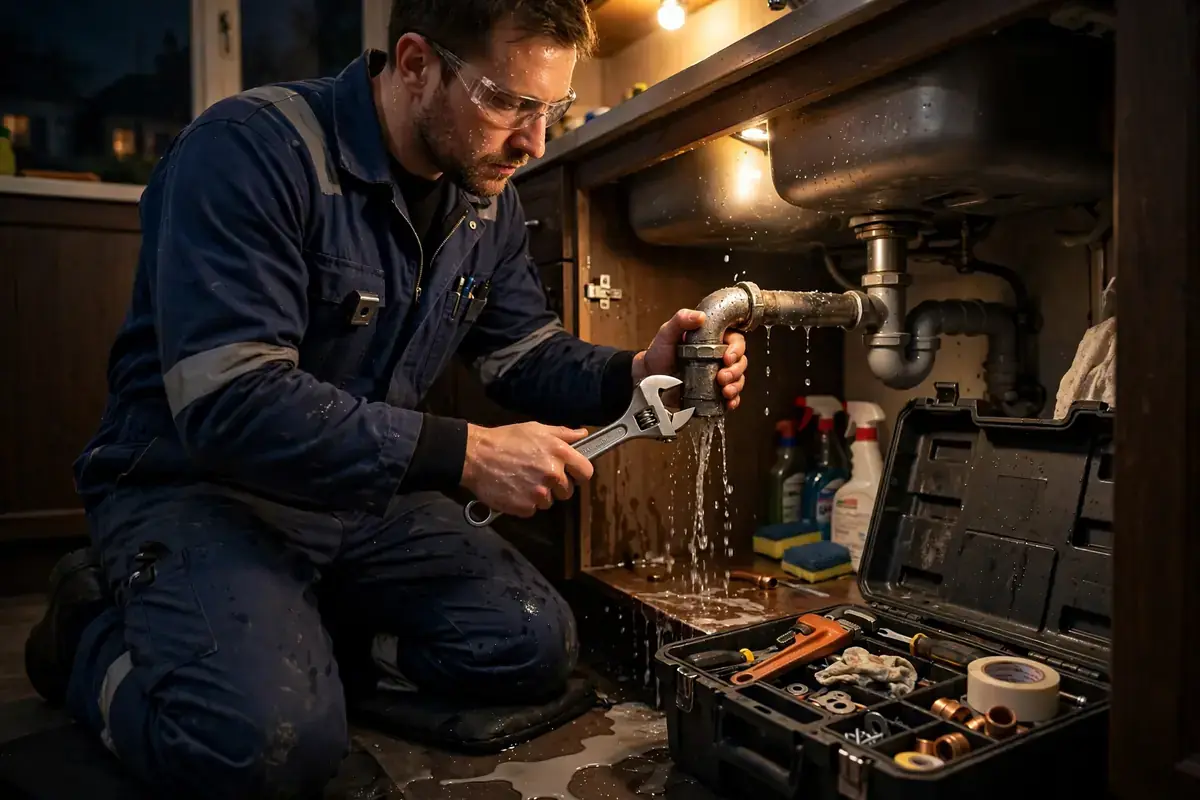
A burst pipe does not check the clock before it splits, and a blocked sewer does not wait for Monday morning. When water is pouring through a ceiling at 2 a.m. or a toilet is overflowing an hour before guests arrive, the difference between a small repair and thousands in water damage is how fast a plumber gets to your door. That is exactly what a 24/7 plumber is for: a licensed plumber who answers the phone and turns up at any hour, on weekends and holidays as well as weekdays.
This guide explains what a 24 7 plumber actually does, what counts as a genuine plumbing emergency, what to do in the first minutes while you wait, what a visit costs, and how to tell a trustworthy emergency plumber from one who will take advantage of your panic. For more practical home fixes, visit our Home Improvement guides.
Need a plumber right now? Our 24/7 emergency line is open day and night. Call 1-840-799-8131 and a plumber will be dispatched to your home.
⚡ Quick Answer: What Is a 24/7 Plumber?
A 24 7 plumber is a licensed plumber available 24 hours a day, 7 days a week, including nights, weekends and holidays, for urgent plumbing problems that cannot wait. Call one immediately for a burst pipe, major leak, sewage backup, no water at all, or a failed water heater in winter. First, shut off the water at the main valve, move valuables out of the water’s path, and mop up what you can. According to Angi’s 2026 cost data, emergency plumbers charge $100 to $500 per hour with a national average of $170 per hour, plus a call-out fee of $100 to $300, so always confirm the rate on the phone before the plumber sets off.
Contents
- Quick Answer: What Is a 24/7 Plumber?
- What Is a 24/7 Plumber?
- What Counts as a Plumbing Emergency?
- What to Do First While You Wait
- What a 24 Hour Plumber Visit Includes
- How Fast Will a 24/7 Plumber Arrive?
- How Much Does a 24 Hour Plumber Cost?
- How to Vet a 24/7 Plumber Before You Book
- Red Flags to Watch Out For
- When the Job Can Wait Until Morning
- Frequently Asked Questions
What Is a 24/7 Plumber?
A 24/7 plumber is a plumbing service that operates around the clock — 24 hours a day, 7 days a week, 365 days a year. Unlike a standard plumber who works weekday business hours and books jobs days in advance, a 24 hour plumber keeps a phone line staffed and a van on call through the night, at weekends, and on public holidays. When you call, you speak to a real person (or at least get a rapid callback), and a plumber is dispatched to your home the same night.
The work is the same trade, but the priorities are different. A daytime plumber plans a full installation or a careful renovation; an emergency plumber’s first job is to stop the damage. That might mean isolating a burst pipe, clearing a sewer backup, or making a water heater safe — then returning in daylight for the permanent repair if parts are not available at 3 a.m. Plumbing covers the whole system of pipes, fixtures and fittings that carry water into a home and waste water away from it, and an emergency plumber has to understand all of it, because at night there is no specialist to refer the job to.
Not every company that advertises “24/7” truly is. Some take your call at midnight and book you for the next morning. Others are genuine round-the-clock operations with a plumber on standby. The honest test is simple: ask when the plumber will arrive, and whether that is tonight. If the answer is tomorrow at 9 a.m., you are talking to a regular plumber with an answering service, not a 24/7 plumber.
What Counts as a Plumbing Emergency?
Not every plumbing problem needs a midnight call-out, and knowing the difference saves you a lot of money. A genuine emergency is any problem that is actively causing damage, is a health hazard, or leaves you without essential water or heat. These are worth a 24 hour plumber call at any hour:
A burst or split pipe is the classic emergency. Water under mains pressure can flood a room in minutes, soak through ceilings, ruin floors and warp wood. If you can hear water running inside a wall or see water pouring from a ceiling, that is an emergency. A major leak from a pipe joint, a cylinder or a tank counts too, especially if you cannot isolate it with a local valve. A sewage backup is also an emergency — wastewater coming up through a toilet, bath or floor drain is a serious health risk, not just a smell. No water at all in the whole house, a complete loss of hot water in freezing weather, or a gas smell near a boiler or water heater (leave the house and call the gas emergency line first) all belong in the same category.
A dripping tap, a slow-draining sink, a toilet that runs on, or a small leak you can catch in a bucket and isolate with a valve are not midnight emergencies. They are annoying, and they should be fixed promptly — our guide to fixing a leaky faucet covers the most common one — but paying three times the normal hourly rate for a drip you can contain until morning is money wasted. The rule of thumb: if water is actively damaging your home, if sewage is involved, or if you have no water or heat in dangerous weather, call now. If you can stop the water and wait safely, wait.
What to Do First While You Wait
The minutes before the plumber arrives are when you can do the most to limit the damage, and most of it needs no tools at all. First, shut off the water. Find the main shutoff valve — usually where the water main enters the house, often near the kitchen sink, in a utility room, or by the front door — and turn it clockwise until it stops. Then open a tap at the lowest point in the house to drain the pressure out of the pipes. If the leak is only at one fixture and you can see a local isolation valve on its supply pipe, shutting that off alone may be enough, and it keeps water running to the rest of the house.
Second, protect what the water can reach. Move rugs, electronics, furniture and anything valuable out of the wet area. Put towels or buckets under the leak, and if water is coming through a ceiling, place a bucket under the drip and, if the ceiling is bulging, carefully pierce it with a screwdriver to let the water drain in a controlled way rather than bringing the whole ceiling down. Third, turn off the electricity to any affected area at the fuse box if water is near sockets, light fittings or appliances — water and electricity together are dangerous, and no plumber wants to work in a live, wet room.
Fourth, take photographs and a short video of the damage before you move anything. Your insurer will want evidence, and photos taken in the moment are far more useful than a description written days later. Finally, if you can, find your boiler manual, the make and model of any leaking fixture, and note when the problem started — the plumber will ask, and having the answer ready saves time on the clock. If you have a home maintenance checklist, it should include the location of the main shutoff valve, and every adult in the house should know where it is before an emergency ever happens.
What a 24 Hour Plumber Visit Includes
A 24/7 plumber’s visit follows a predictable sequence, and knowing it helps you judge whether the plumber you called is doing a proper job. It starts with the phone call: a good dispatcher asks what the problem is, where the water is coming from, whether you have shut the water off, and how urgent it is. They should give you an arrival window and quote the call-out fee and the hourly or flat rate before the van moves. If they will not quote a price at all, that is a warning sign.
On arrival, the plumber should assess the problem before starting any work: trace the leak to its source, check the condition of the pipes and fittings around it, and explain what needs to happen in plain language. In an emergency, the first task is usually to make the situation safe — isolating the damaged section, fitting a temporary cap or repair clamp, or draining a system so it cannot flood again. If the full repair is possible with the parts on the van, they will do it there and then. If a part has to be ordered, a good plumber makes the system safe, explains what the permanent fix will be, and books a daytime return visit. The temporary repair is not a failure; it is the correct first step when a merchant is closed at 2 a.m.
Before leaving, the plumber should test the repair under pressure, check the surrounding pipes for further weakness, tidy up, and leave you a written invoice listing the call-out fee, labour, parts and any guarantee on the work. Ask for that invoice and the guarantee in writing — a verbal “it’s all covered” is worth very little if the repair fails a week later.
How Fast Will a 24/7 Plumber Arrive?
Response time is the whole point of a 24/7 service, but “24/7” describes when you can call, not how fast the van gets there. In a city or large town, a genuine emergency plumber typically arrives within 60 to 90 minutes of your call; some aim for under an hour. In rural areas, or during a cold snap when burst pipes hit dozens of homes at once, the wait can be two to three hours or more, and an honest dispatcher will tell you that on the phone rather than promising the impossible.
The time of night matters too. A call at midnight on a Tuesday is usually answered faster than one at 3 a.m. on Christmas morning, when fewer plumbers are on standby. Weather is the other big factor: the first hard frost of winter produces a surge of burst-pipe calls, and demand regularly outstrips supply for a day or two. If the plumber cannot reach you quickly, ask what to do in the meantime — a good dispatcher will talk you through shutting off the water and making the situation safe by phone.
When you call, give the dispatcher your full address, a phone number you will answer, a clear description of the problem, and whether you have already shut the water off. Clear information is what gets you placed correctly in the queue: a burst main gets priority over a toilet that will not flush, and a dispatcher who knows the facts can make that call properly.
How Much Does a 24 Hour Plumber Cost?
Emergency plumbing costs more than daytime plumbing, and you should go in with your eyes open. According to Angi’s 2026 cost data, emergency plumbers charge $100 to $500 per hour, with a national average of $170 per hour, and holiday calls can reach $600 per hour. Standard daytime plumbing, by comparison, runs $40 to $200 per hour, so after-hours work typically costs 1.5 to 3 times the normal rate. On top of the hourly charge, most companies add an emergency call-out or trip fee — Angi puts that at $100 to $300, while Forbes Home lists $100 to $350 with an average of $225.
HomeAdvisor’s figures tell a similar story from a different angle. Its burst pipe guide puts a typical burst pipe repair at $200 to $3,000, with an average of $500, and notes emergency call-out fees of $100 to $300 on top. A standard plumber visit runs $182 to $501, with an average of $341, and a service-call fee of $100 to $250 often covers the first hour. HomeGuide’s numbers are a little lower on the hourly side — $100 to $350 per hour for emergency work, with a $150 to $250 call-out fee — which shows why these figures should be treated as ranges, not quotes: sources disagree because rates vary widely by city, by the plumber’s experience, and by the job itself.
What actually drives your bill is timing, the type of repair, and access. An evening weekday call is cheaper than a weekend call, which is cheaper than a Christmas Day call. A burst pipe inside a wall costs more than a split pipe under a sink, because opening the wall and making good afterwards takes time. Some plumbers charge a flat rate for common emergency jobs — say a fixed price to clear a blocked drain — which can be better value than an open-ended hourly charge at 2 a.m. Always ask whether the quote is flat or hourly, whether the call-out fee is included or extra, and whether parts are included or charged on top. Get the answer before the work starts, and get it in writing on the invoice.
How to Vet a 24/7 Plumber Before You Book
Vetting a plumber at 2 a.m. with water on the floor is hard, which is why the smart move is to pick your emergency plumber before you ever need one. Save the number of a local plumber you have already checked, the way you save your doctor’s number. When you do have to choose in a hurry, run through these checks on the phone:
Ask whether the plumber is licensed and insured, and what the licence number is. Licensing rules vary by area, but a legitimate plumber will answer without hesitation. Ask for the company name, a landline or business number, and a written estimate before work begins. Check reviews quickly — a company with dozens of recent reviews and a real address is a safer bet than a number that only exists on a classifieds site. Ask how long the company has been trading and whether the work is guaranteed, and for how long. A one-year guarantee on labour is a reasonable expectation; a plumber who offers no guarantee at all is telling you something.
Also confirm that the person coming is an employee of the company you called, not a subcontractor passed the job by a lead-selling website. Some national call centres take your details and sell the job on to the nearest available plumber, adding a margin and removing any accountability. Asking “Are you the company, or a call centre?” is a fair question, and a genuine local firm will answer it plainly.
Red Flags to Watch Out For
Emergency work attracts bad actors precisely because the customer is stressed and cannot wait. The most common red flag is a plumber who refuses to give any price before arriving, or who quotes a low call-out fee on the phone and then presents a bill several times higher once the work is done. Another is pressure: “If I don’t fix this now, your whole house will flood” may be true for a burst main, but it is also the standard line used to sell unnecessary work. A plumber who starts cutting into walls or replacing large sections of pipe without explaining why, or without showing you the damage, should be asked to stop and explain.
Watch out for plumbers who insist on cash only, who have no company name on the van or the invoice, who will not give a written receipt, or who demand full payment before any work is done. A deposit for large parts is reasonable; full payment upfront for an emergency call-out is not. Equally, be wary of a plumber who arrives without the tools or parts for the job they were called for — a genuine 24 hour plumber carries the common repair parts in the van, and a second trip for a basic pipe fitting is a sign of poor preparation rather than bad luck.
Finally, trust your instincts. If the plumber will not answer a direct question, will not show identification, or makes you uncomfortable, you are allowed to send them away and call someone else — as long as the water is shut off and the situation is safe. A burst pipe is urgent, but it is rarely so urgent that you must accept the first person who knocks.
When the Job Can Wait Until Morning
Knowing when not to call an emergency plumber is just as useful as knowing when to call one. A dripping tap, a toilet that runs constantly, a slow drain, a noisy pipe, a small leak you have caught in a bucket, or a water heater that is making a strange noise but still producing hot water can all wait until a daytime appointment — which will cost far less. HomeGuide puts a same-day visit during business hours at $100 to $200 per hour, against $120 to $300 after hours on a weekday, $150 to $350 at weekends, and $200 to $450 or more on holidays, so waiting for morning when it is safe to do so is a real saving.
The test is always the same: can you stop the water, is anything being damaged, and is anyone at risk? If you can isolate the problem with a valve, put a bucket under it, and sleep on it safely, book a regular plumber for the morning. If you cannot stop the water, if the damage is spreading, or if sewage or gas is involved, call the 24/7 line now and do not wait for daylight.
One last piece of preparation costs nothing and pays off the first time you need it: keep the number of a vetted local 24 hour plumber saved in your phone, and make sure everyone in the household knows where the main shutoff valve is. The cheapest emergency call is the one where you shut the water off in thirty seconds, because the damage never had a chance to spread.
Frequently Asked Questions
How much does a 24/7 plumber cost?
According to Angi’s 2026 cost data, emergency plumbers charge $100 to $500 per hour, with a national average of $170 per hour and holiday calls reaching $600 per hour, plus a call-out fee of $100 to $300. HomeAdvisor puts a burst pipe repair at $200 to $3,000, averaging $500. Always confirm the hourly rate and call-out fee on the phone before the plumber sets off, and ask whether parts are included.
How quickly will a 24/7 plumber arrive?
In a city or large town, most genuine emergency plumbers arrive within 60 to 90 minutes; in rural areas or during a cold snap, it can be two to three hours or more. Ask for an arrival window when you call, and if the dispatcher cannot give one, ask what to do to make the situation safe while you wait.
What should I do first if a pipe bursts?
Shut off the water at the main valve, open a tap at the lowest point in the house to drain pressure from the pipes, and turn off electricity to any affected area. Move valuables out of the water’s path, put buckets under leaks, and take photos of the damage for your insurer. Then call a 24 hour plumber.
Is a 24/7 plumber more expensive than a regular plumber?
Yes, usually 1.5 to 3 times as much, according to Angi. Emergency rates reflect night and weekend working, the cost of keeping a plumber on standby, and the call-out fee. If the problem can be isolated safely and left until morning, a daytime visit is much cheaper.
Do 24/7 plumbers work on holidays?
A genuine 24/7 plumber works 365 days a year, including Christmas Day and New Year’s Day, but holiday calls are the most expensive — Angi lists holiday rates up to $600 per hour, and HomeGuide puts them at $200 to $450 or more. Expect the highest rates of the year and the longest waits on major holidays.
If water is pouring into your home right now, do not wait for morning. Call our 24/7 emergency plumber line on 1-840-799-8131 — a plumber is available day and night, weekends and holidays, and will be dispatched straight to your door.